Unreal Engine 5 (VR) - 3 weeks game jam in 2025 - 4th Semester | Game Design B.A.
The silence won't save you.
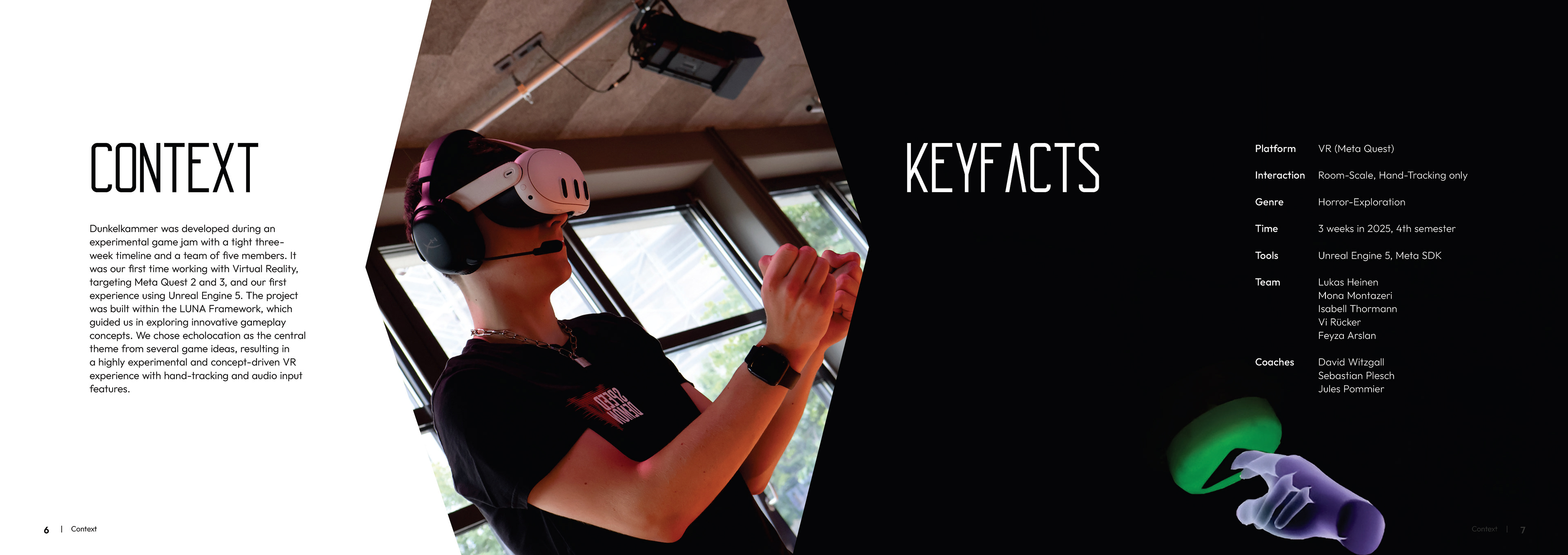
Dunkelkammer is an experimental dark VR experience where vision is taken from you, and sound becomes
your lifeline.
your lifeline.
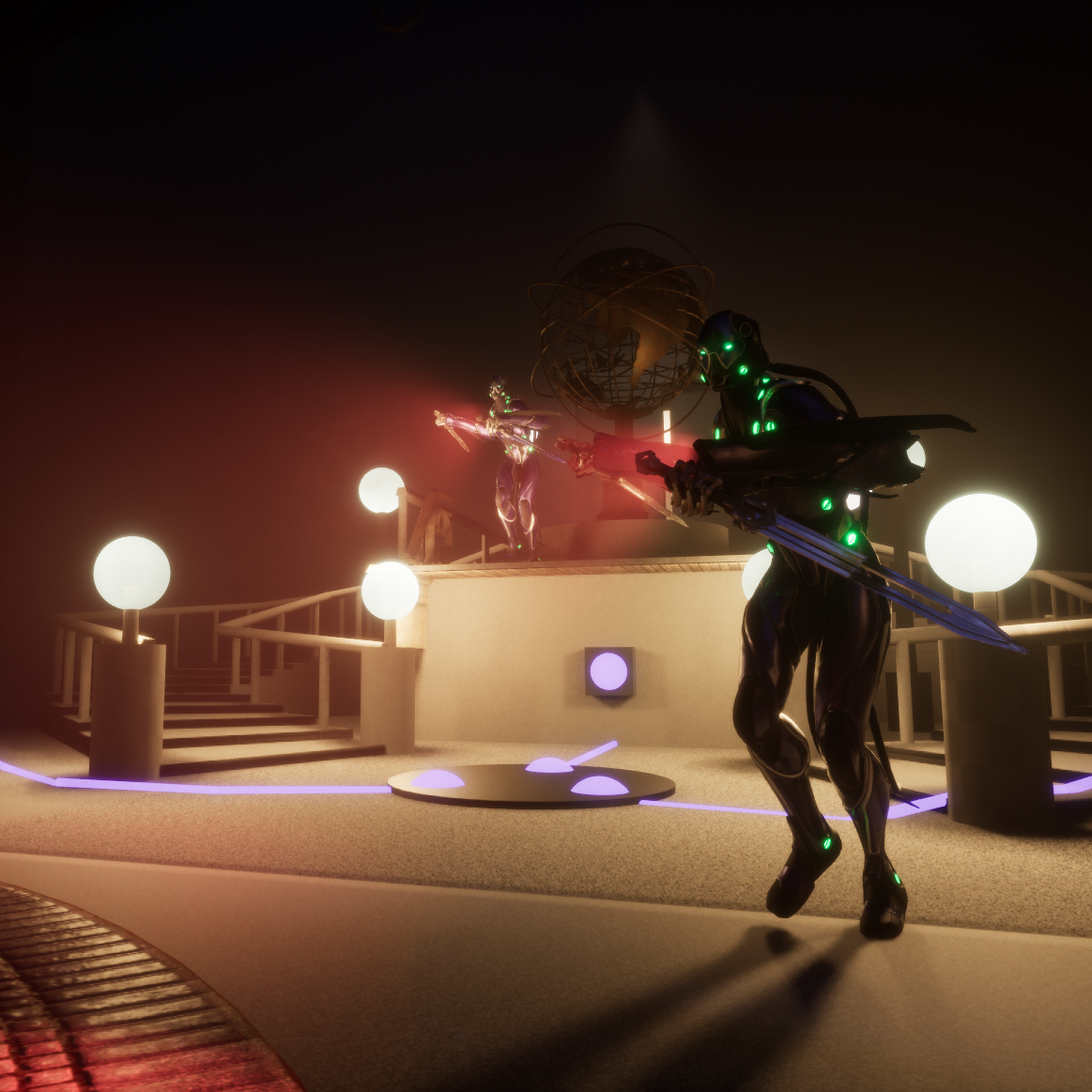
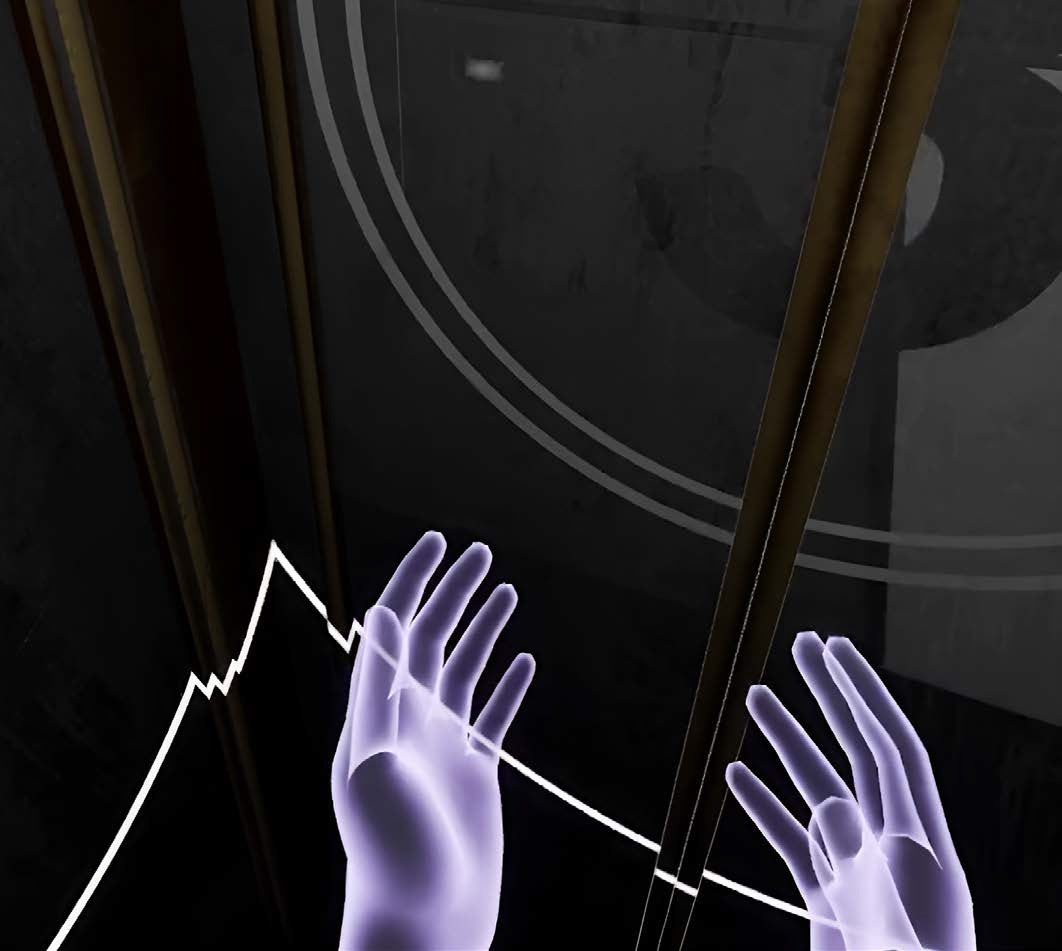
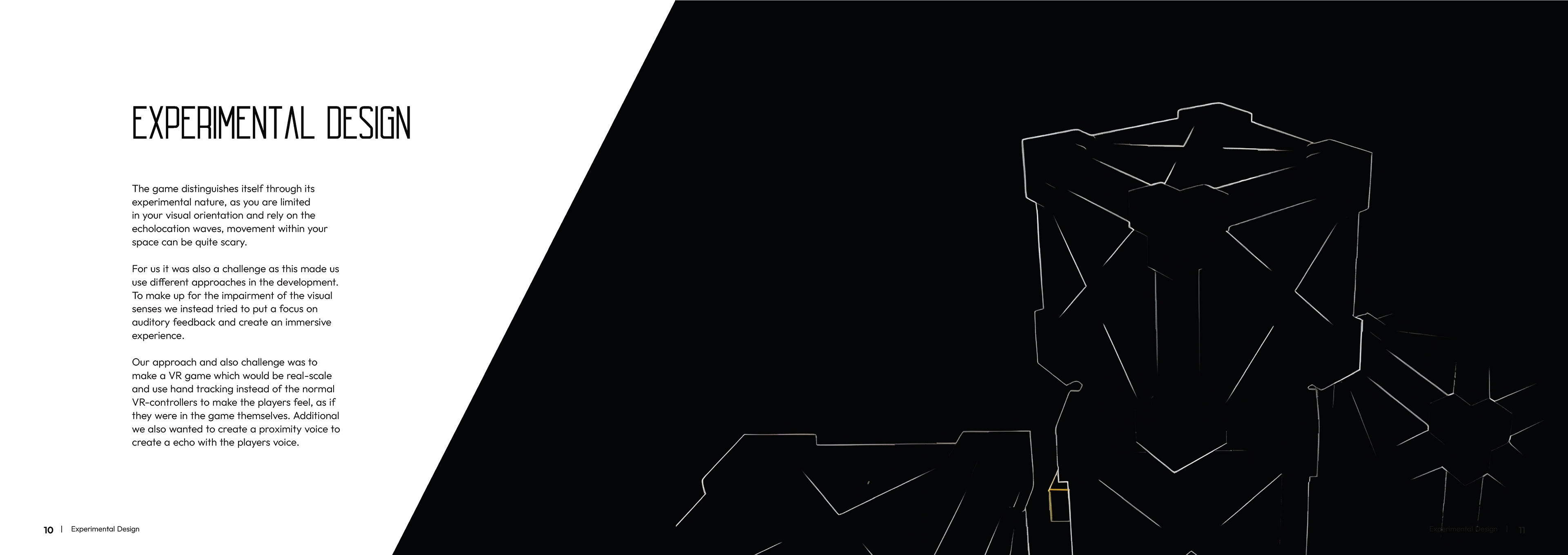
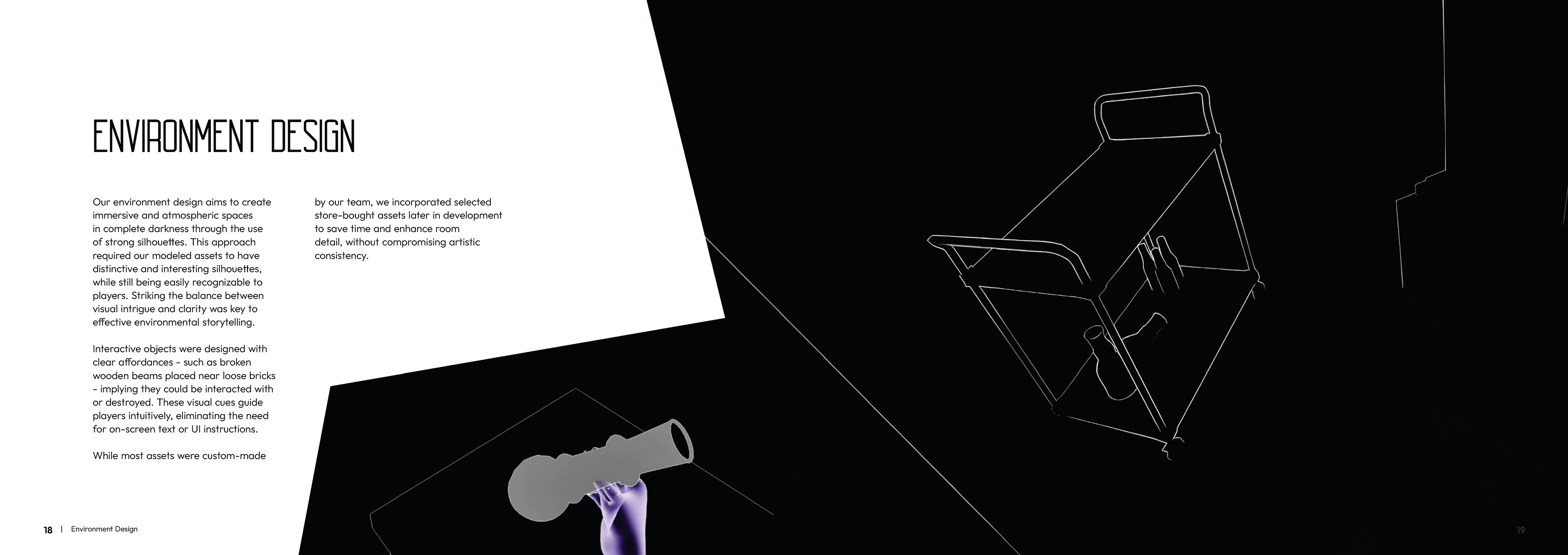
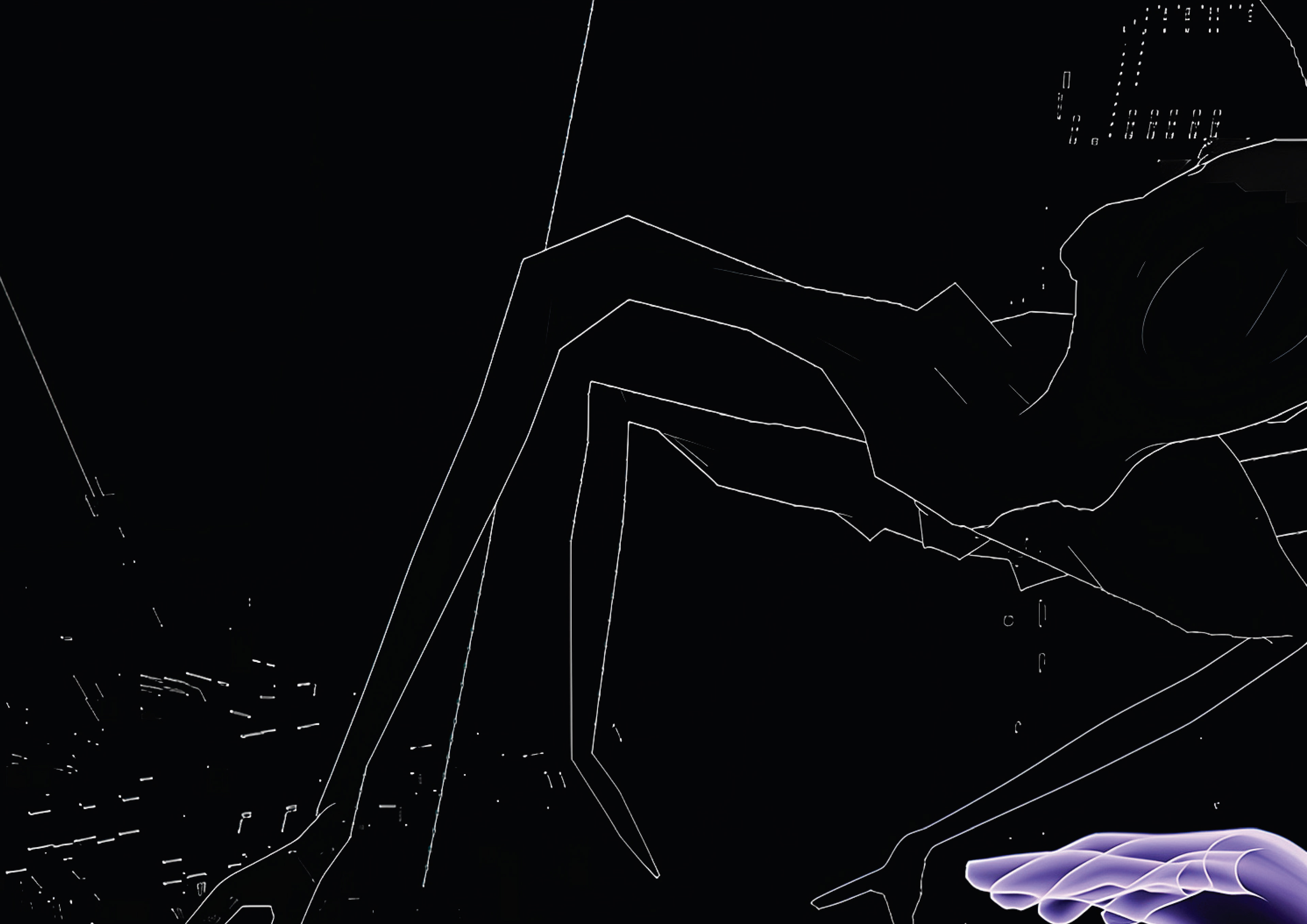
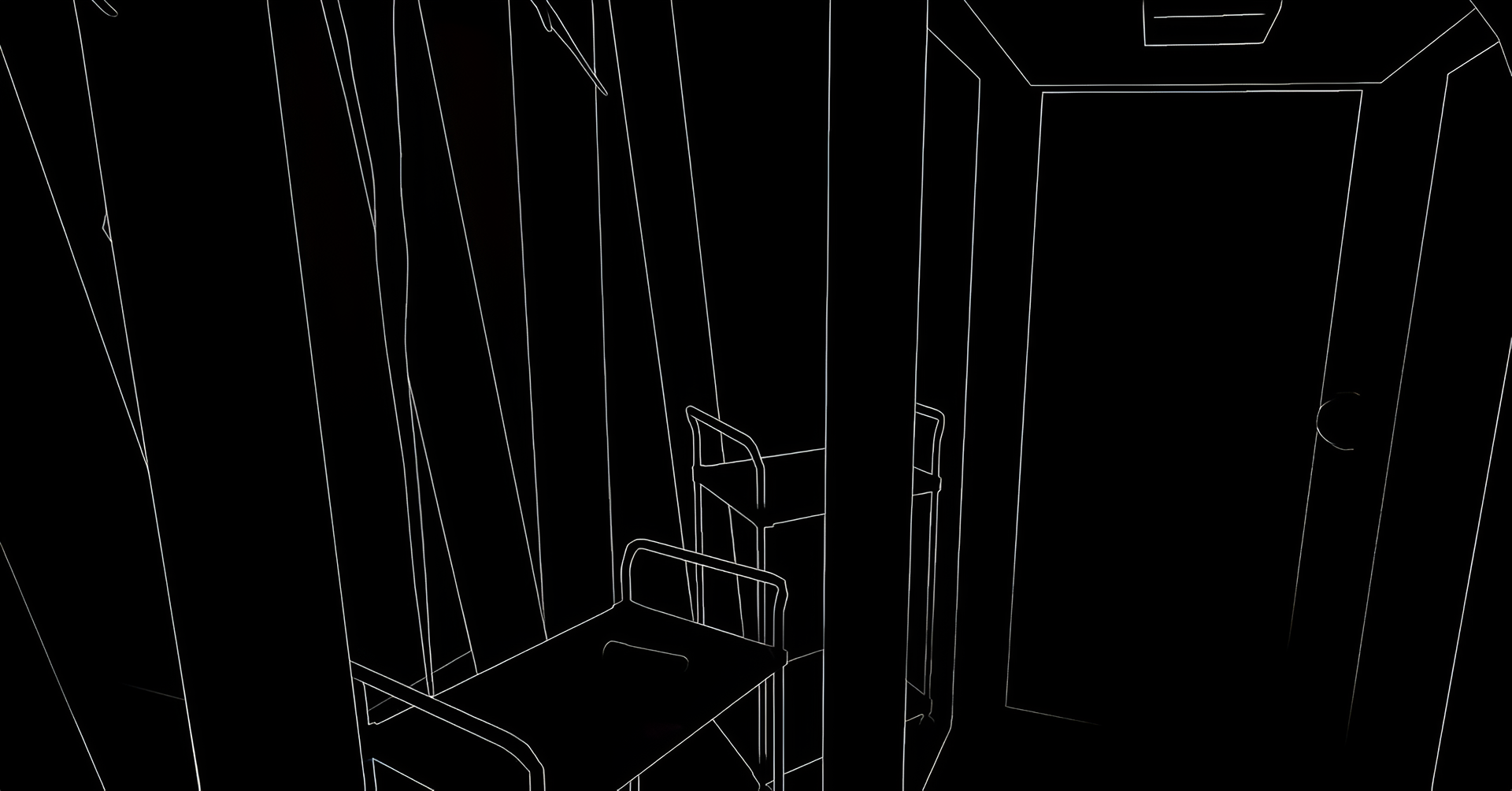
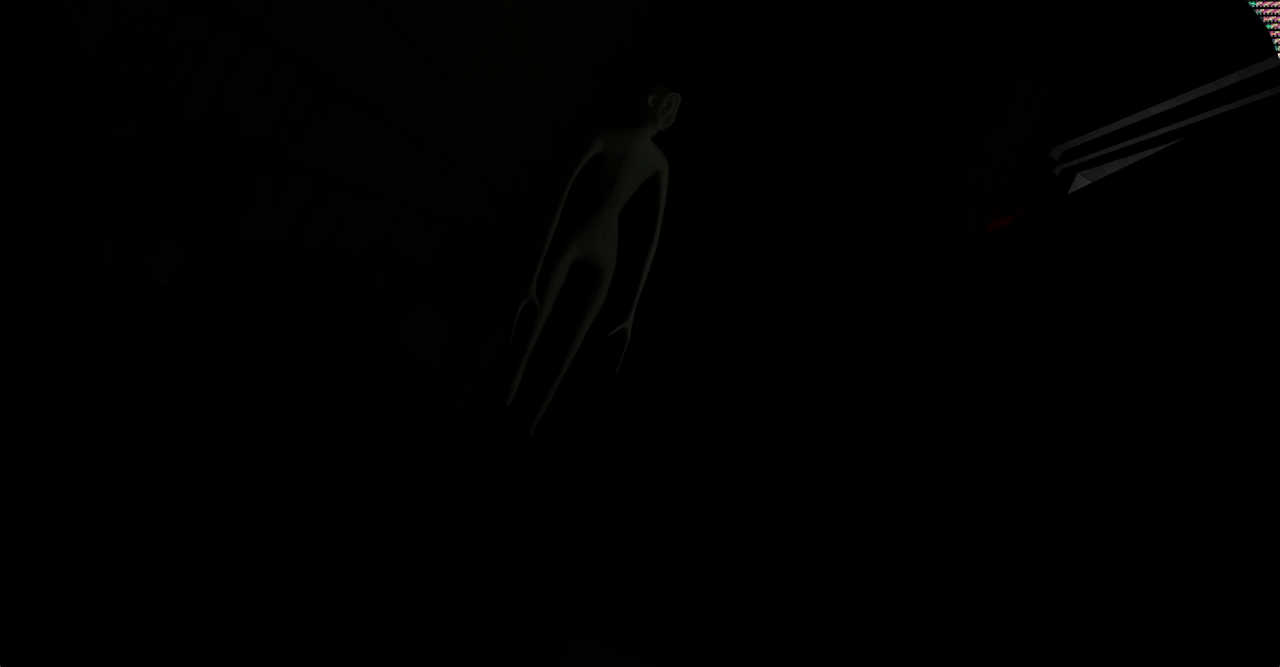
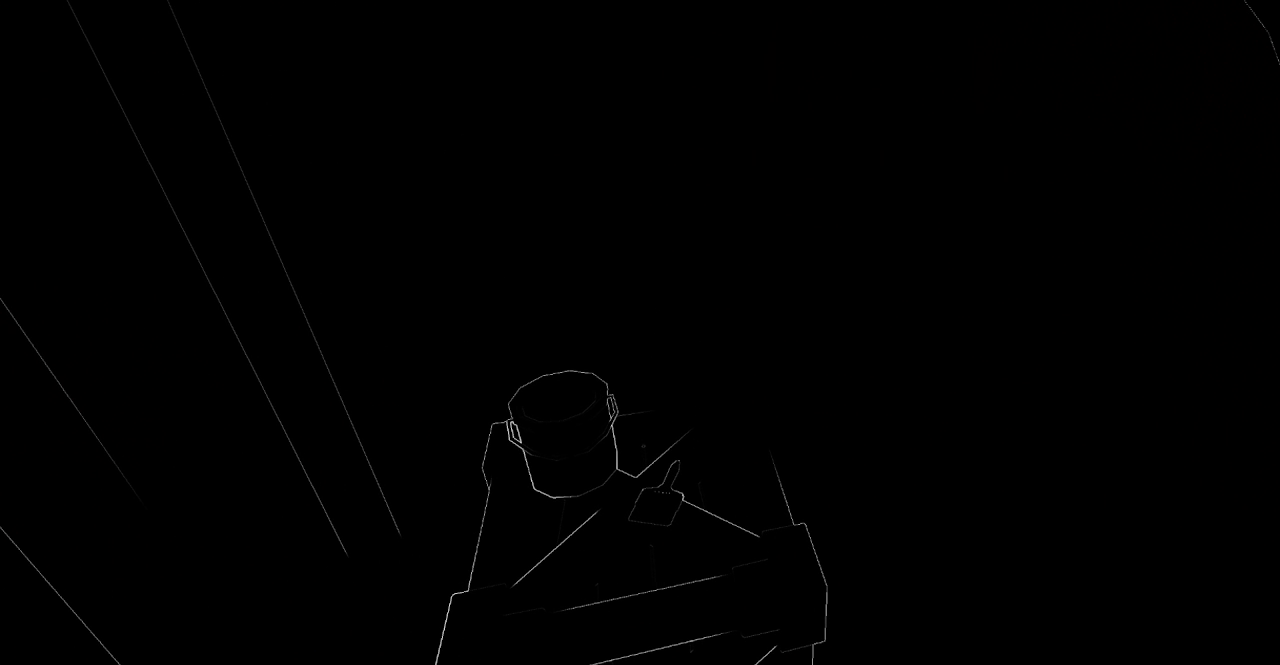
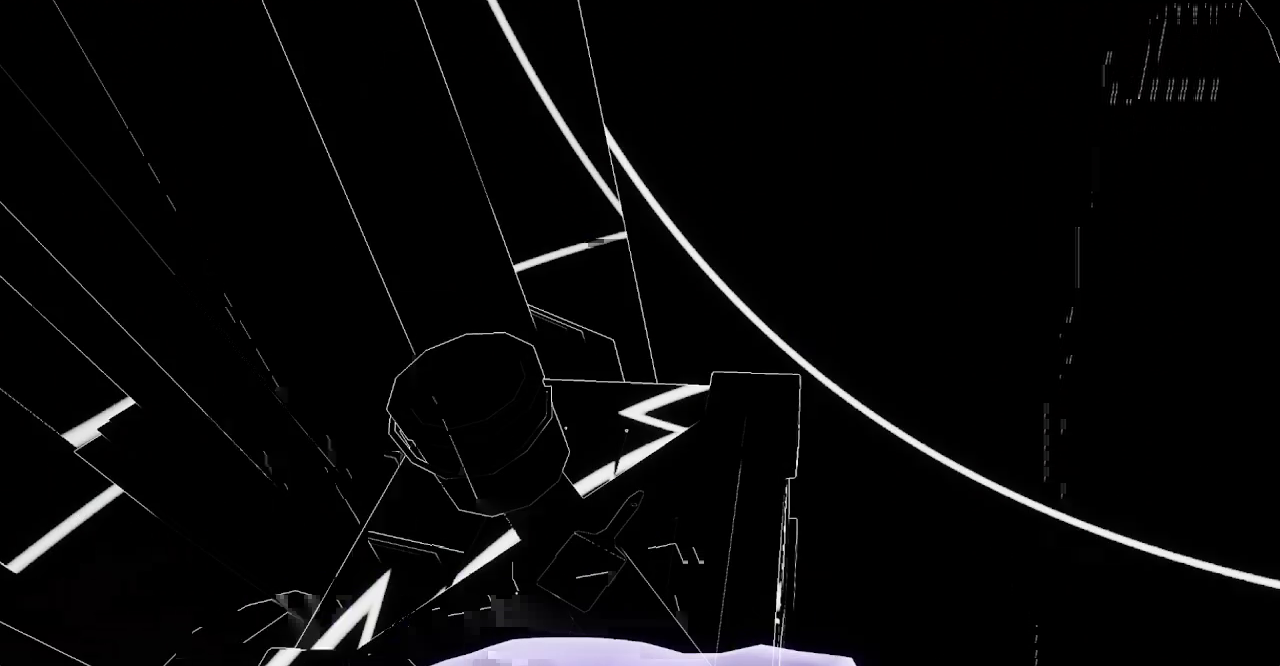
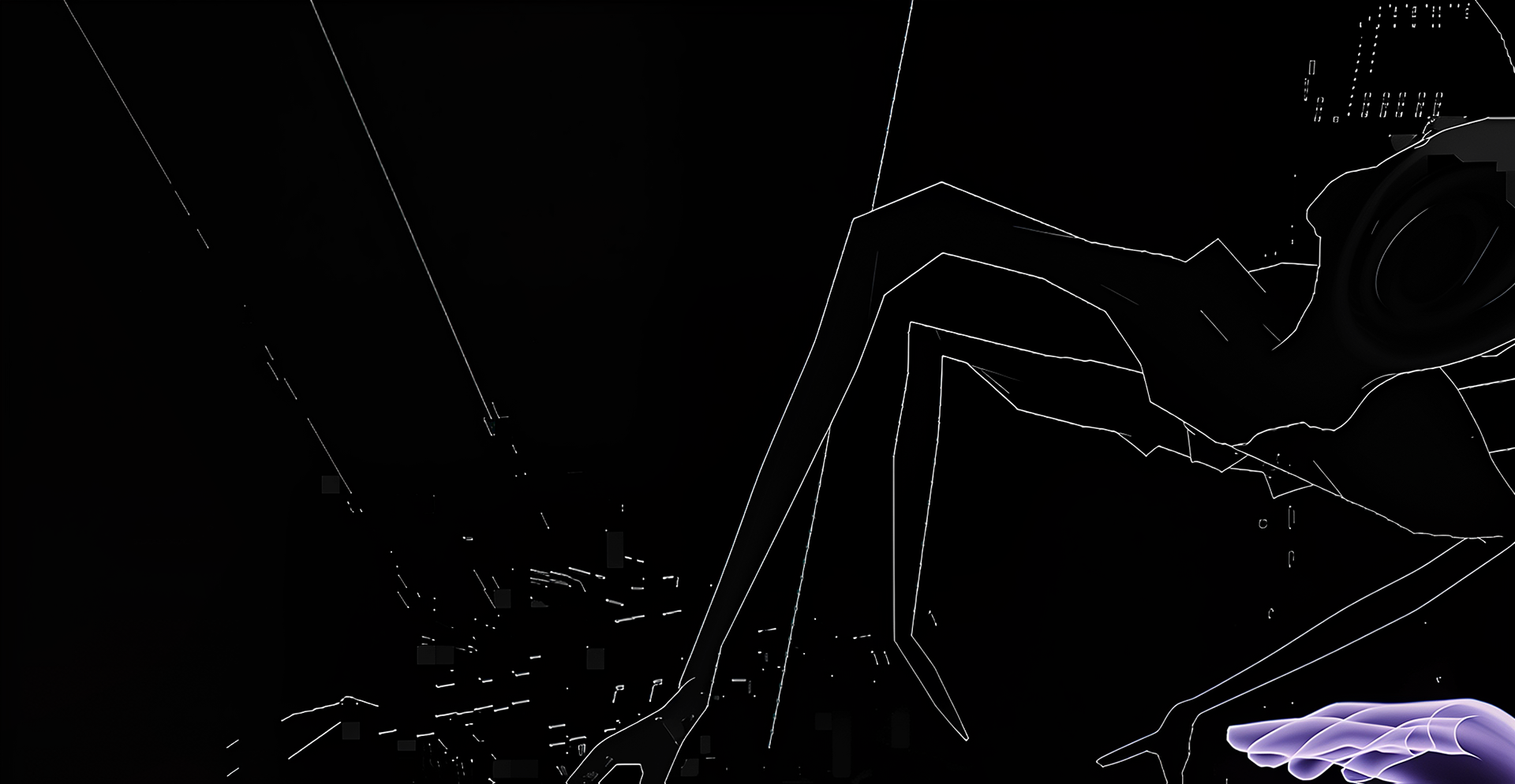
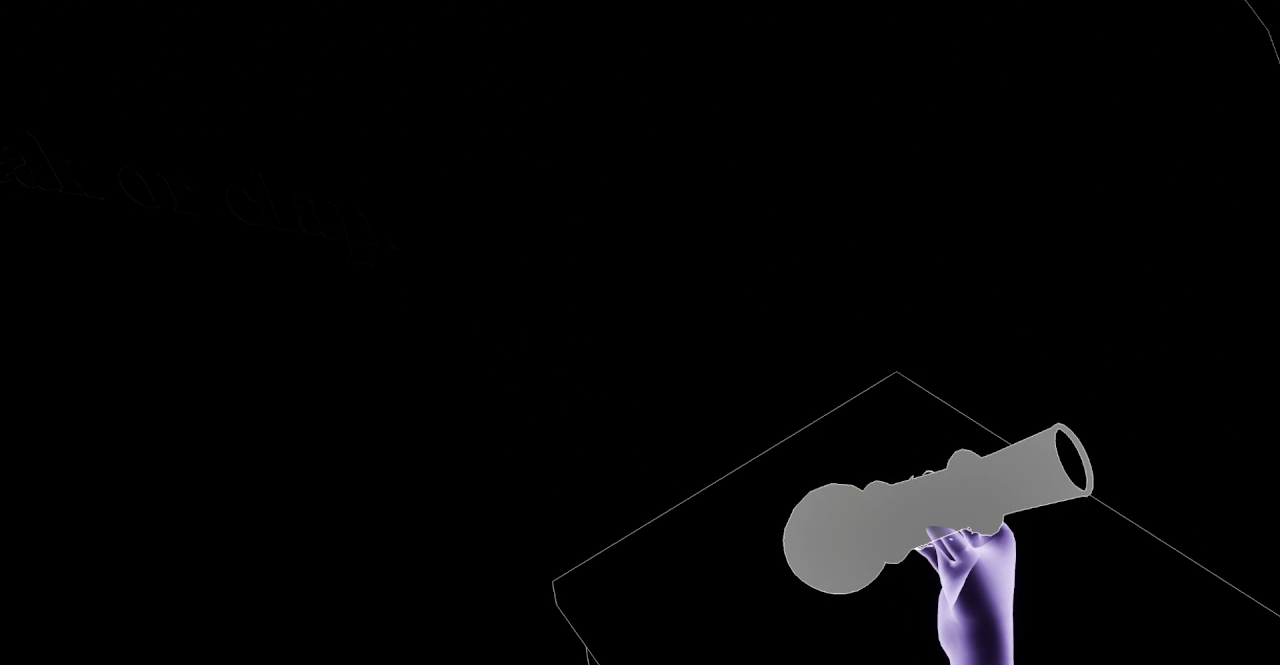
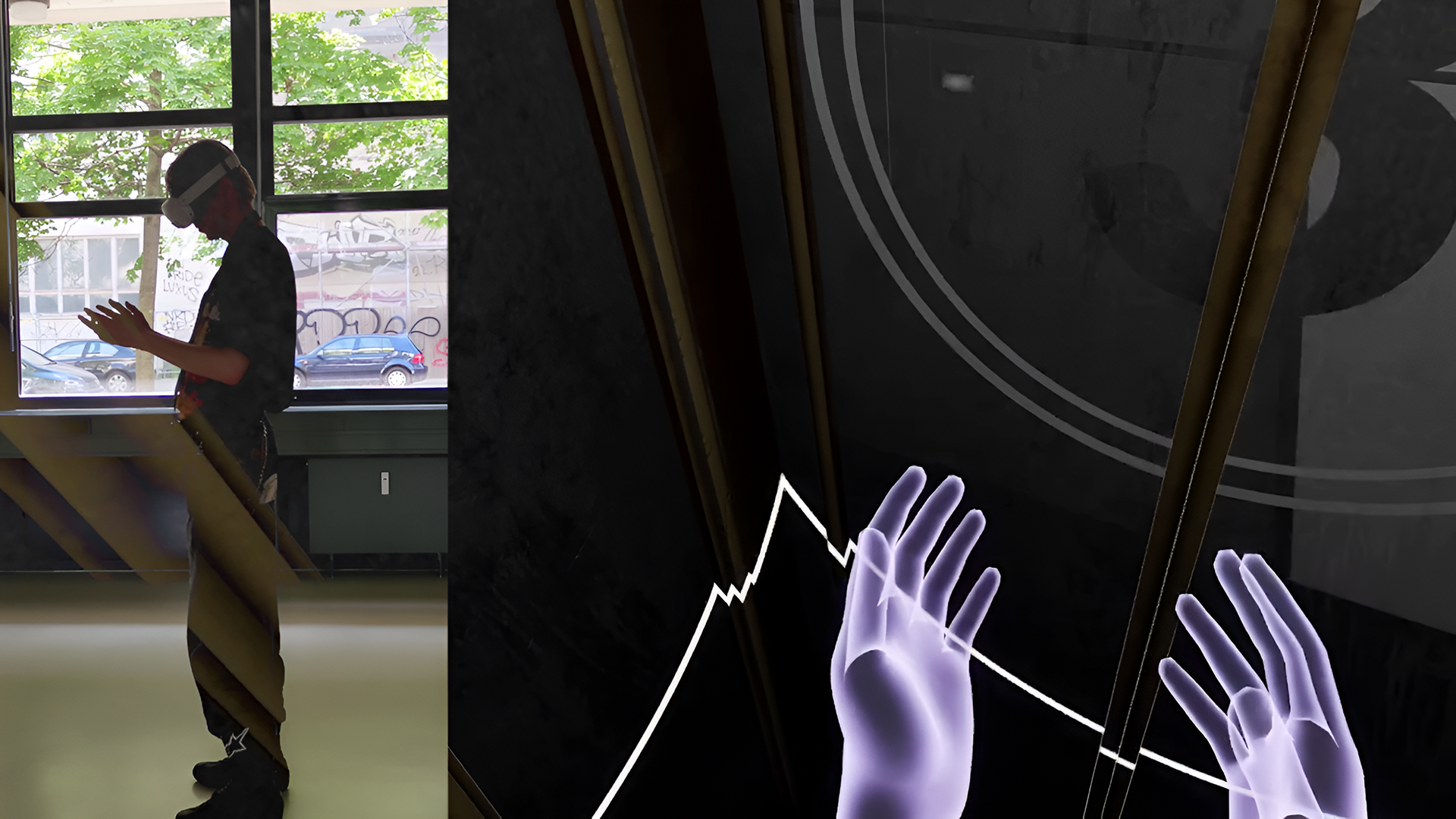
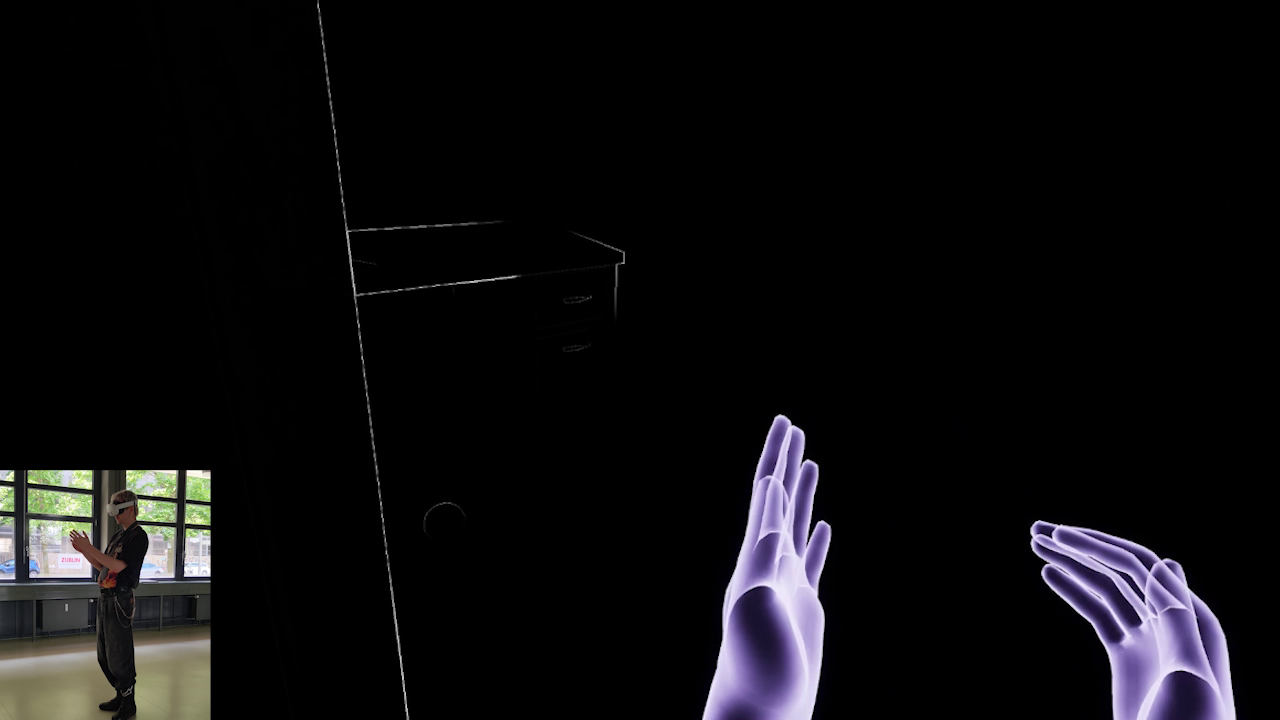
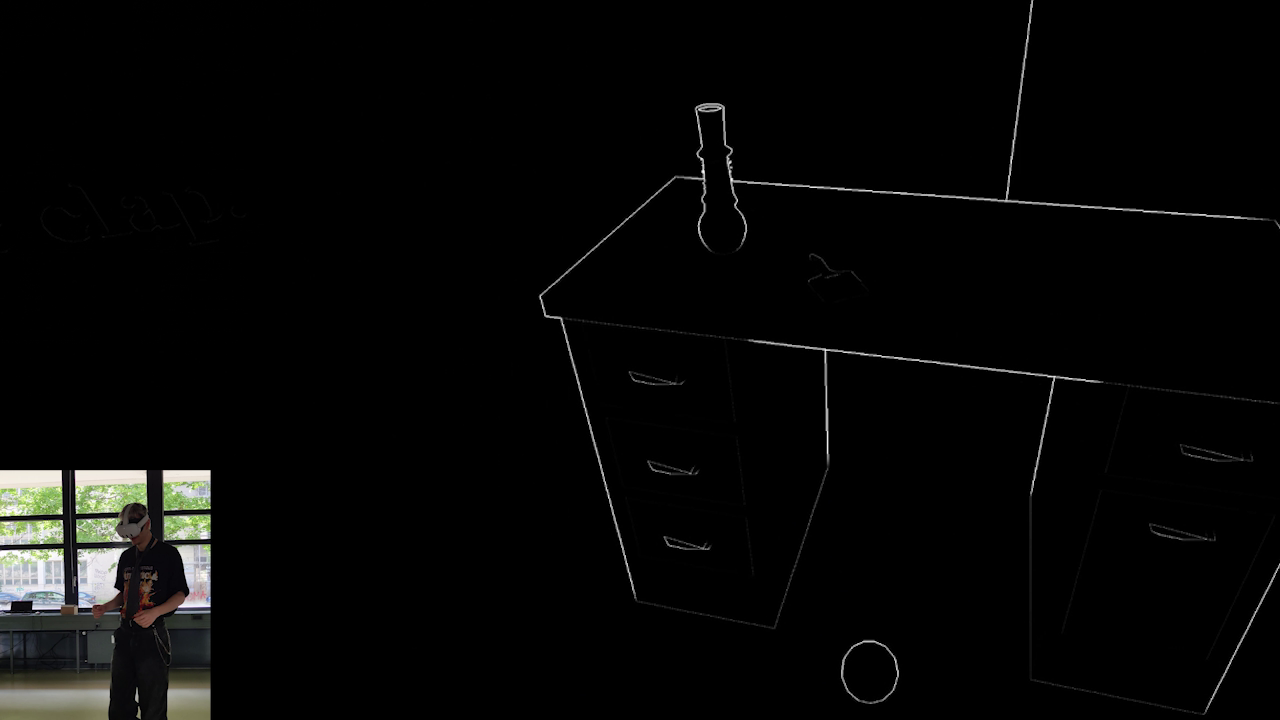
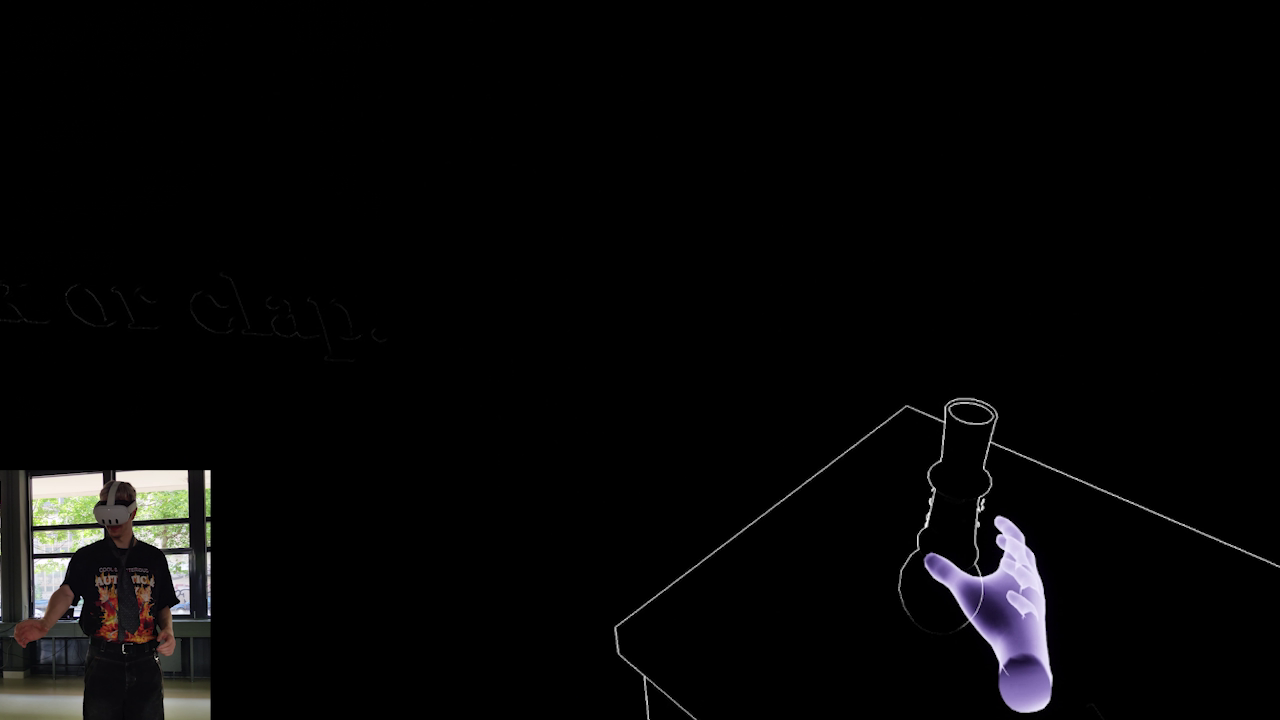
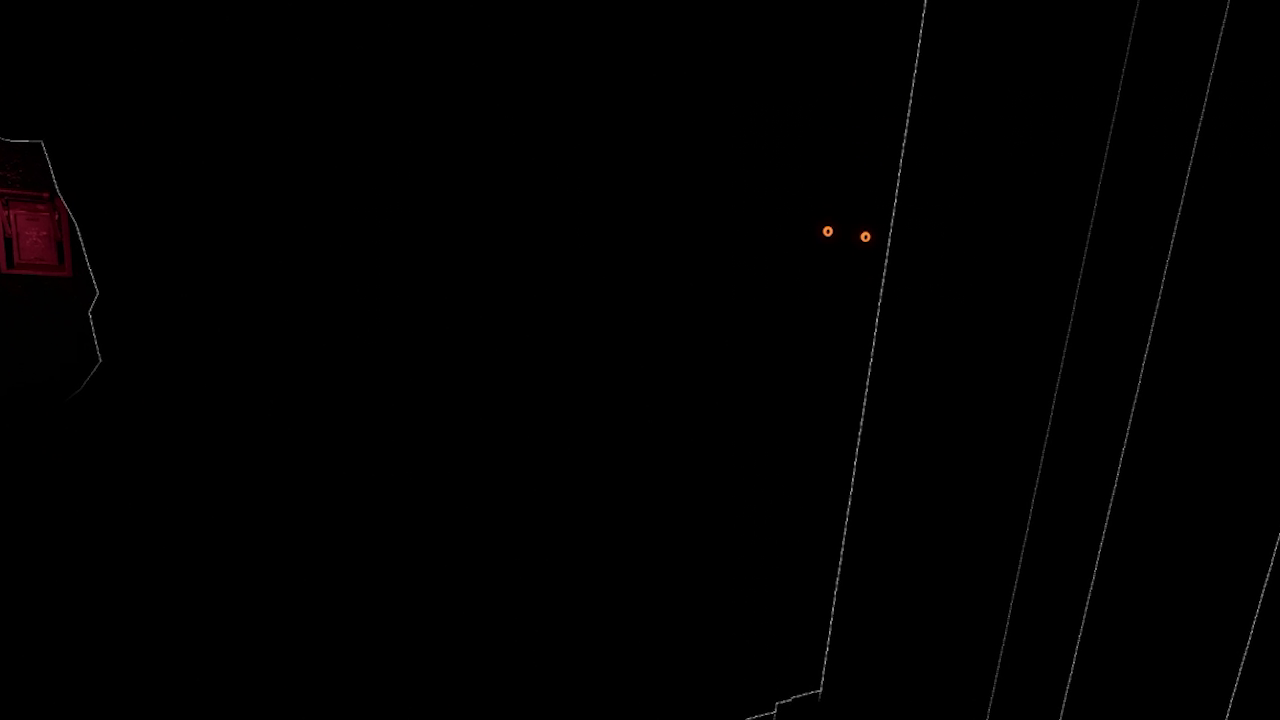
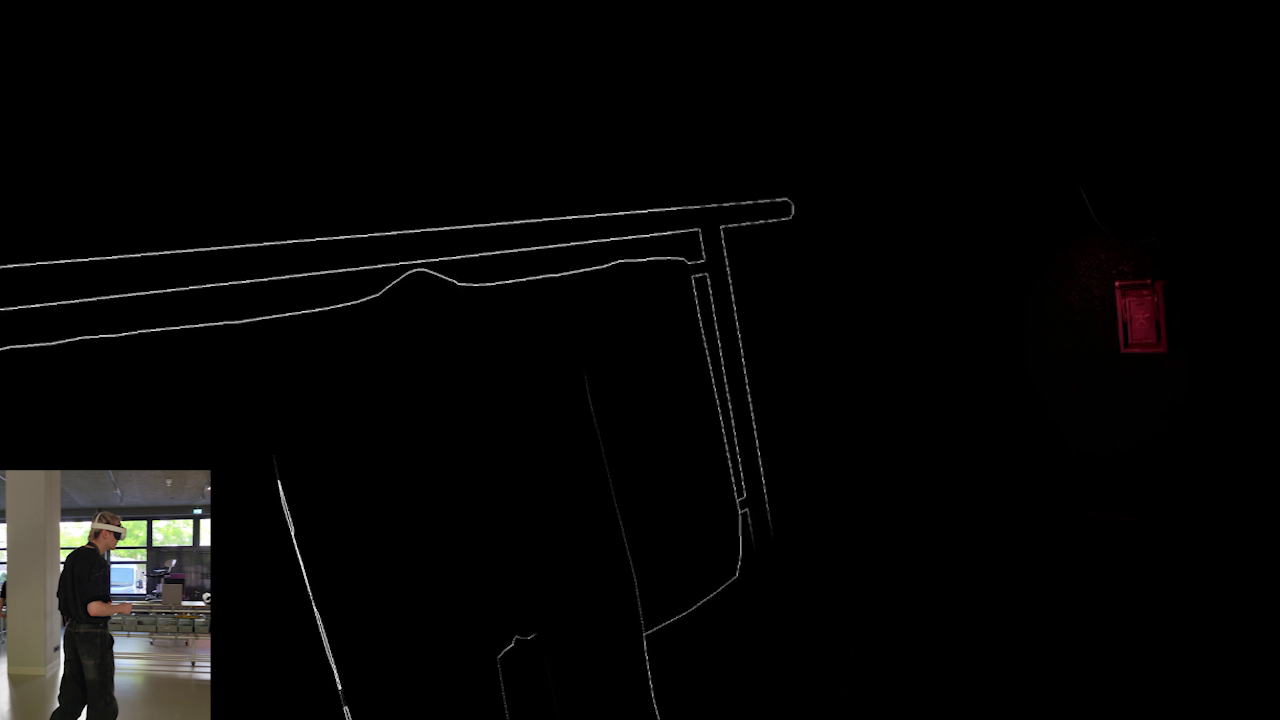
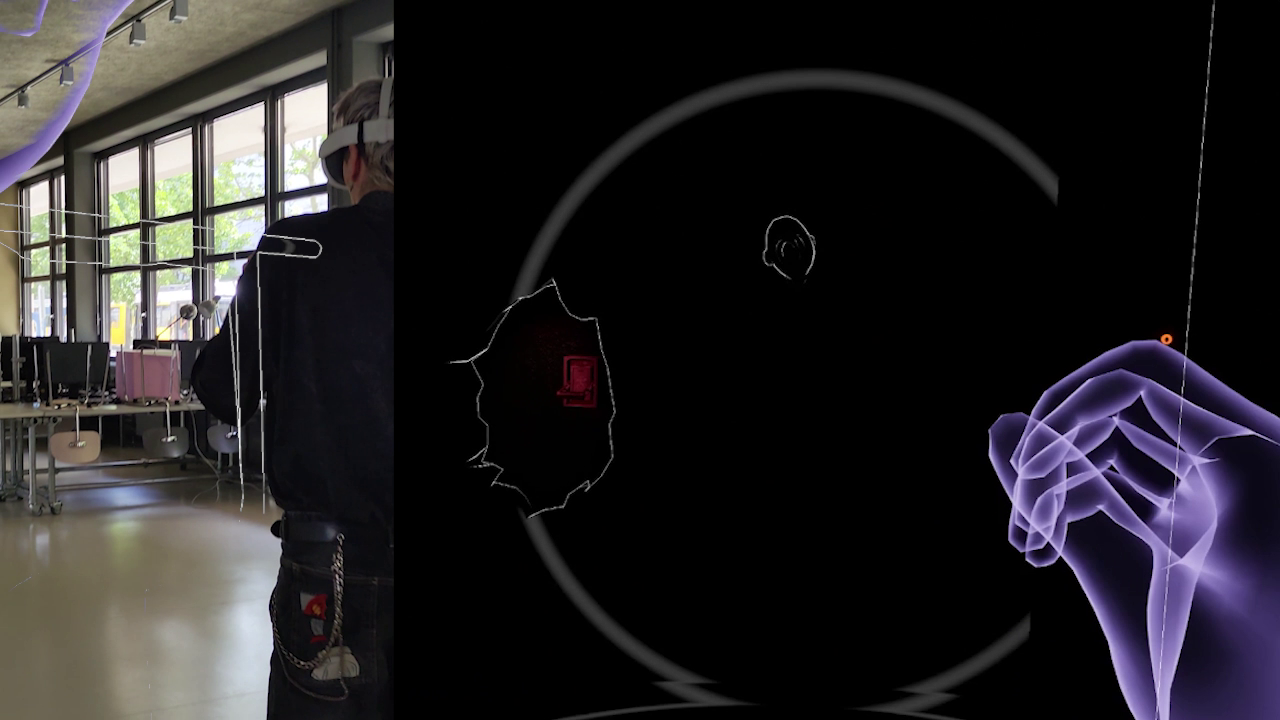
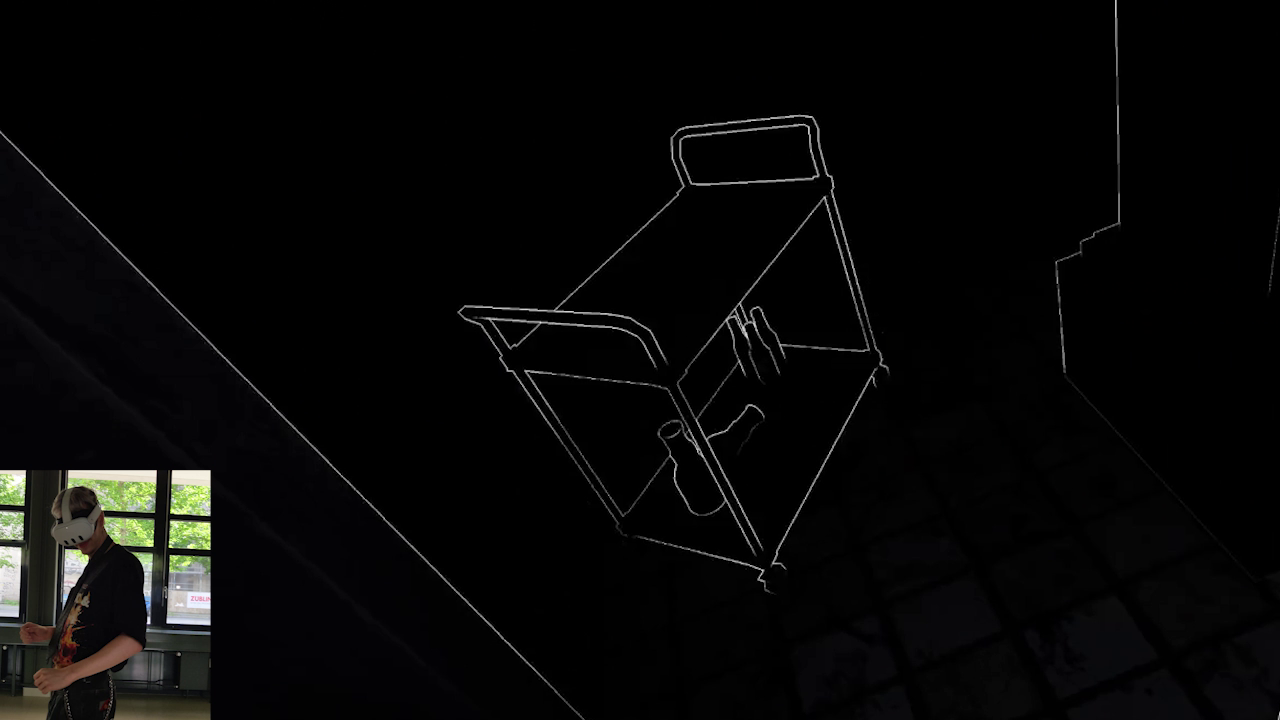
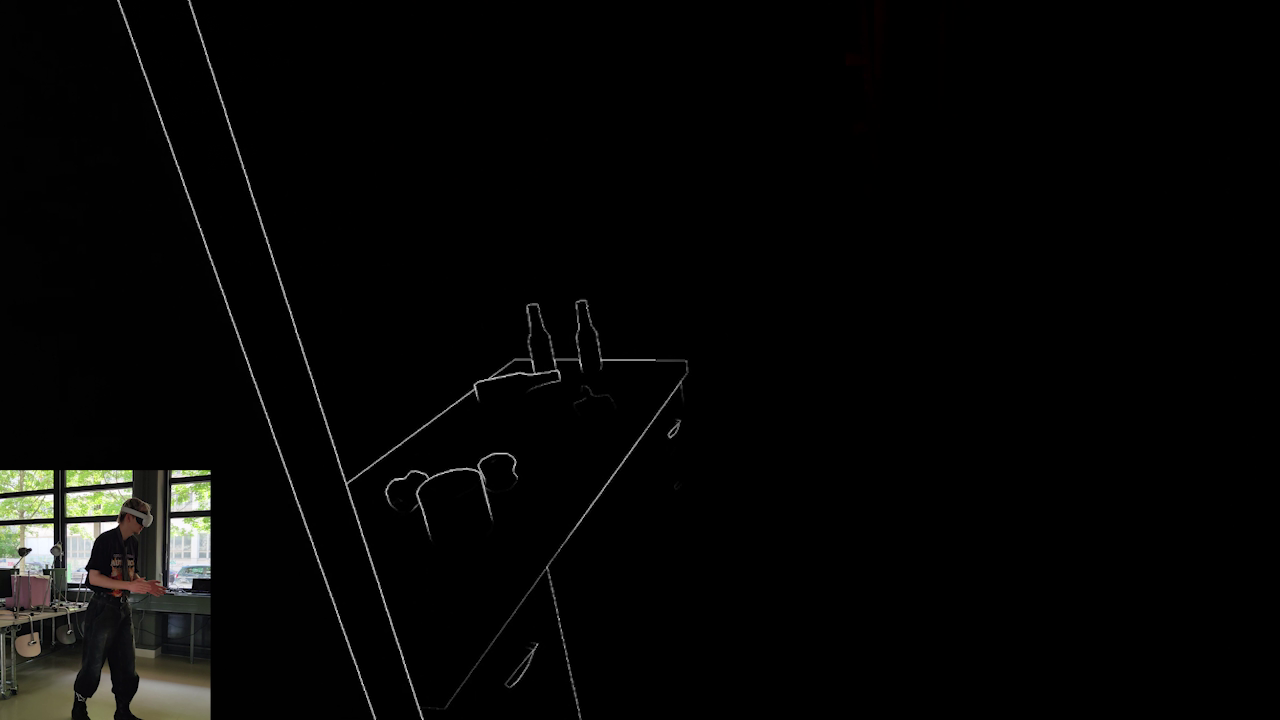
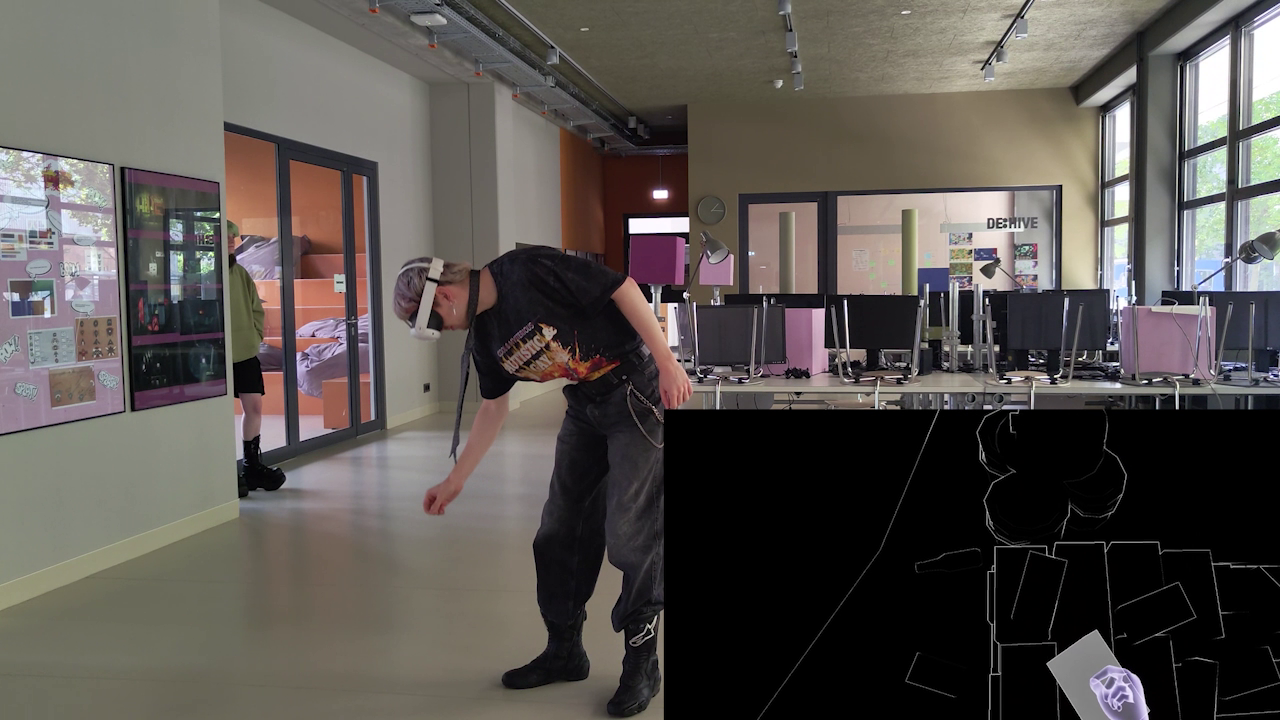
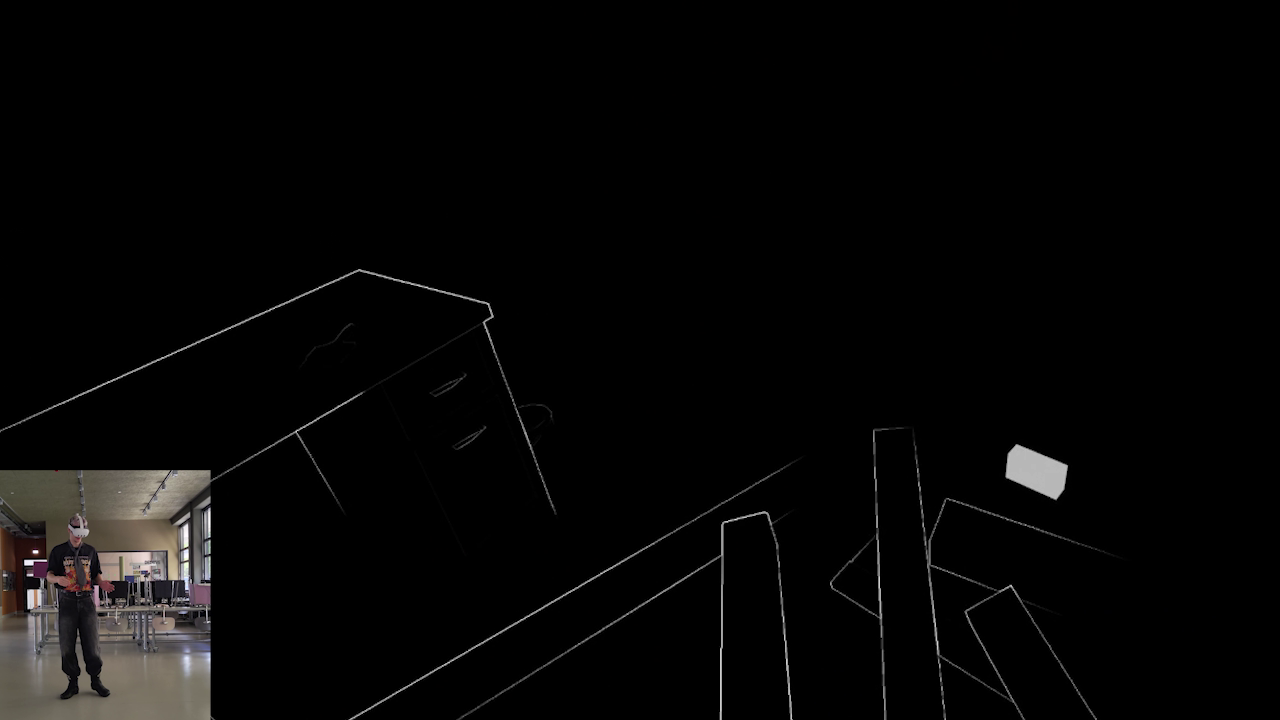
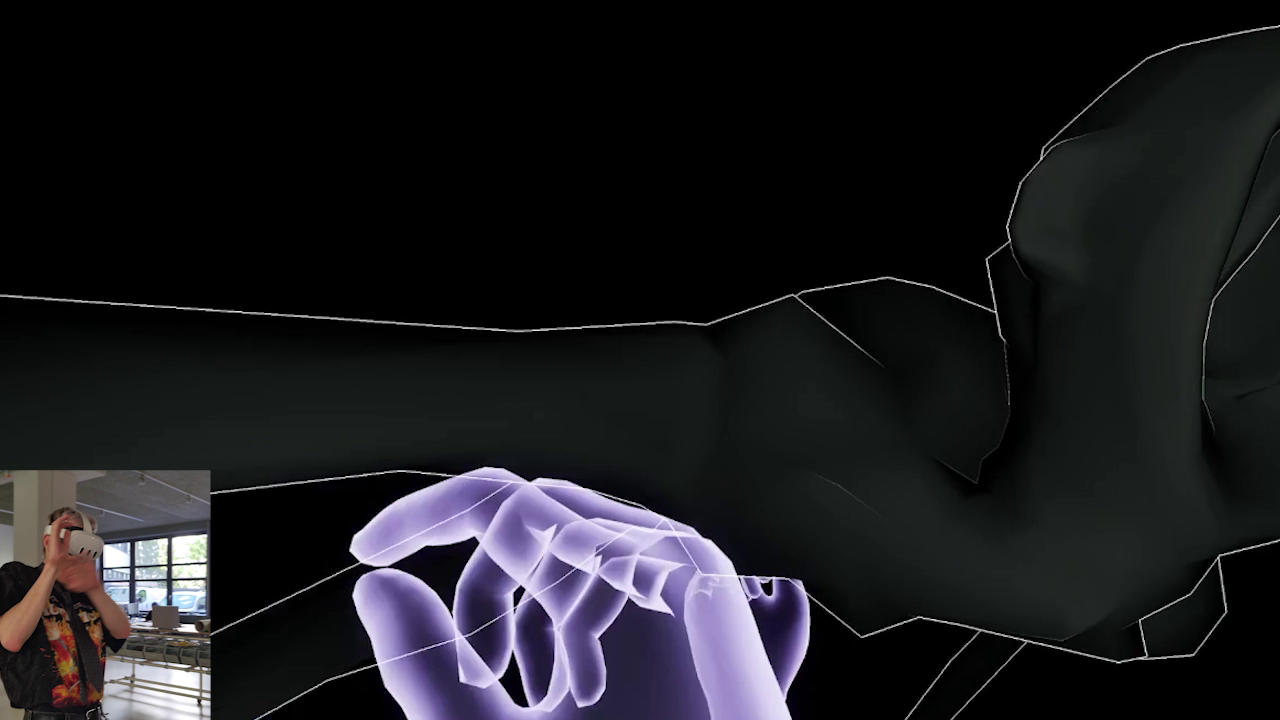
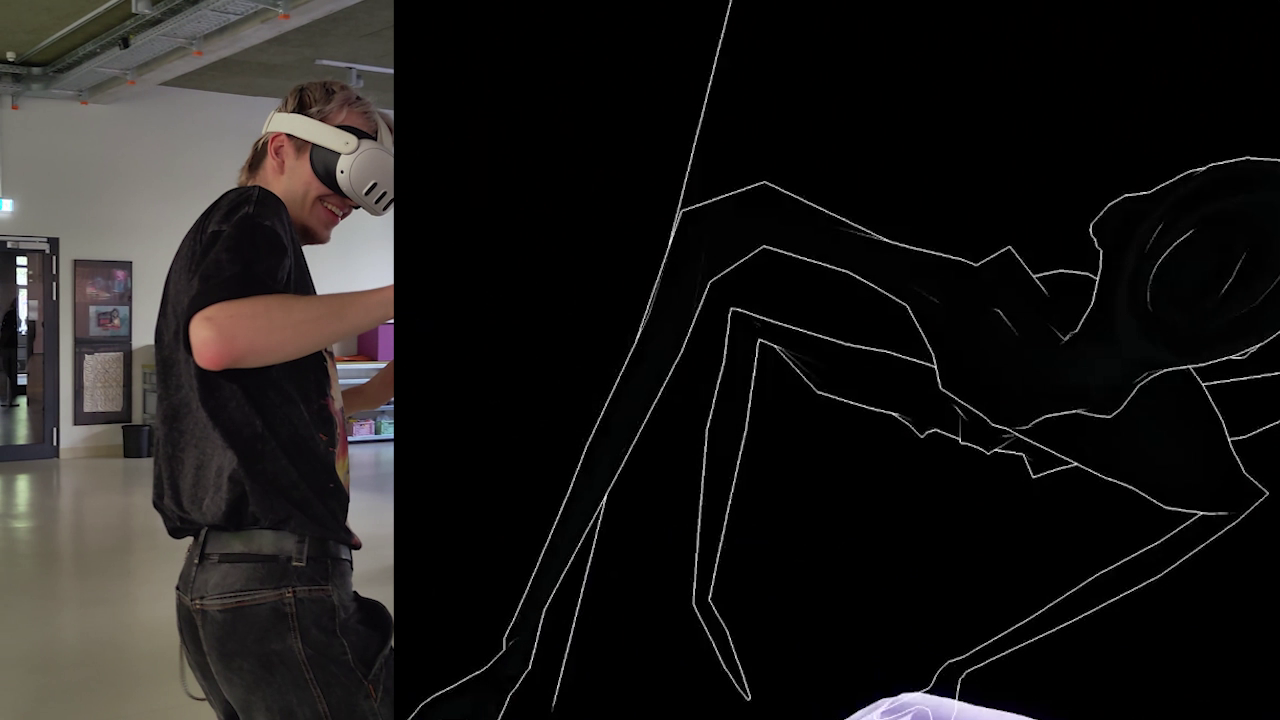
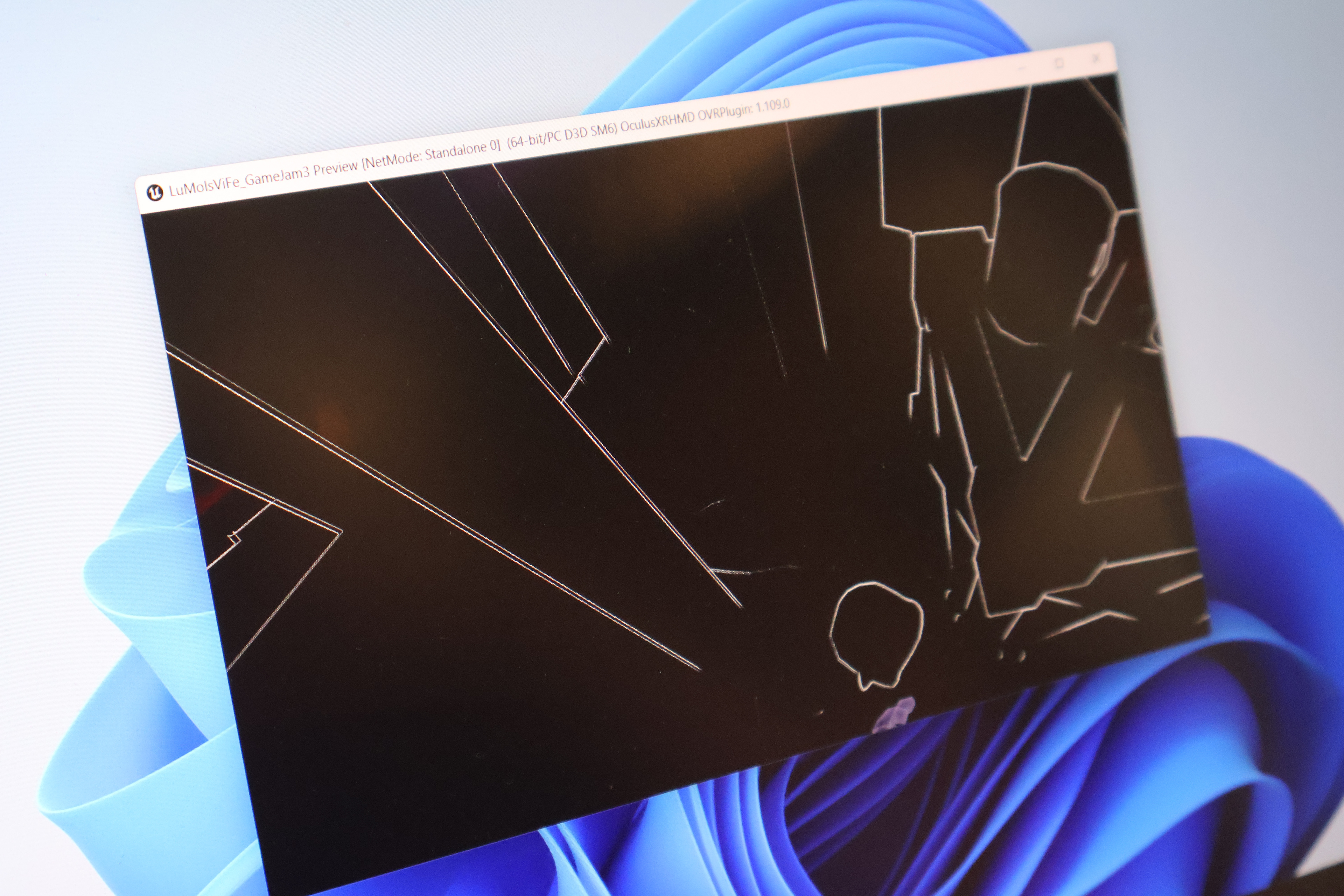
Built entirely for VR hand-tracking with no need for controllers, the game invites you to navigate pitch-black environments using only echolocation - triggered by your own claps, voice, or any sound you make. Every noise sends out a ripple of visual feedback, revealing fleeting silhouettes of your surroundings before darkness swallows them again.
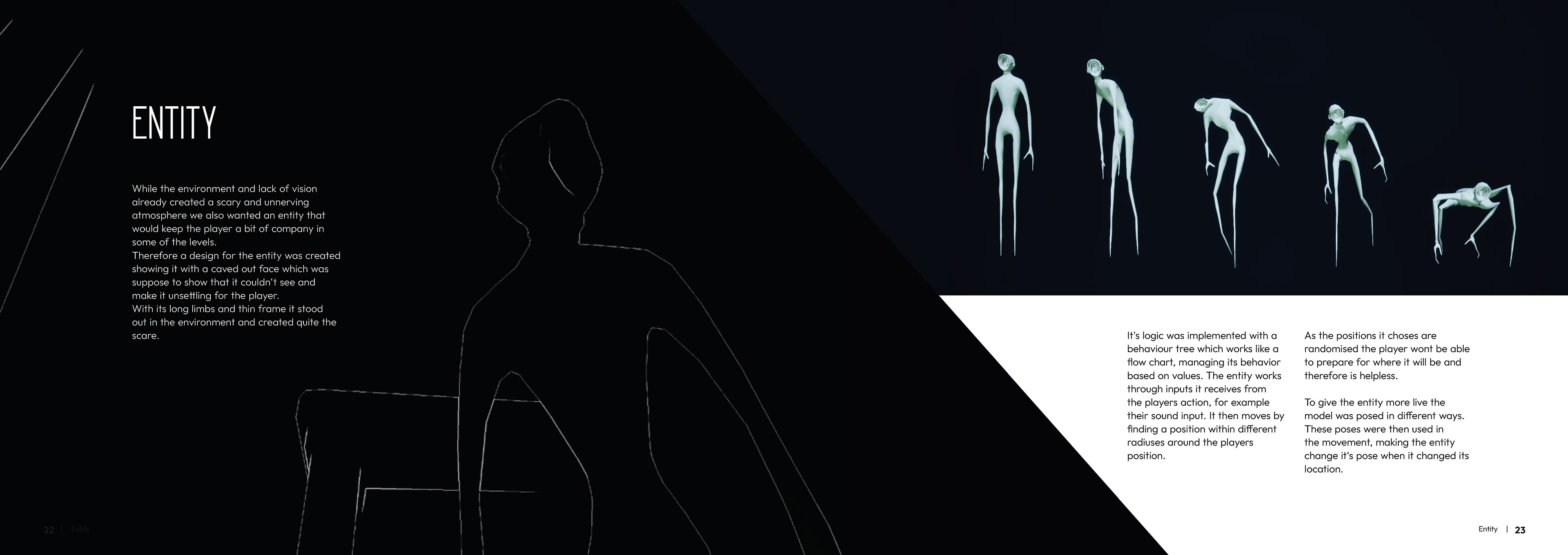
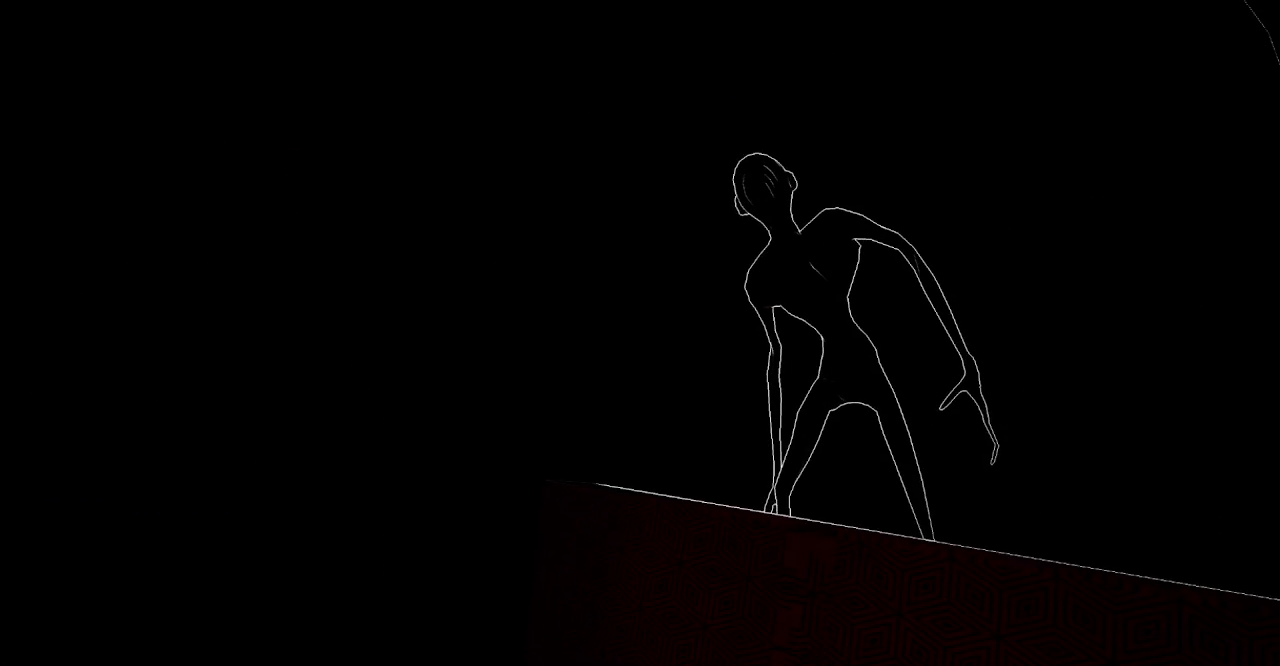
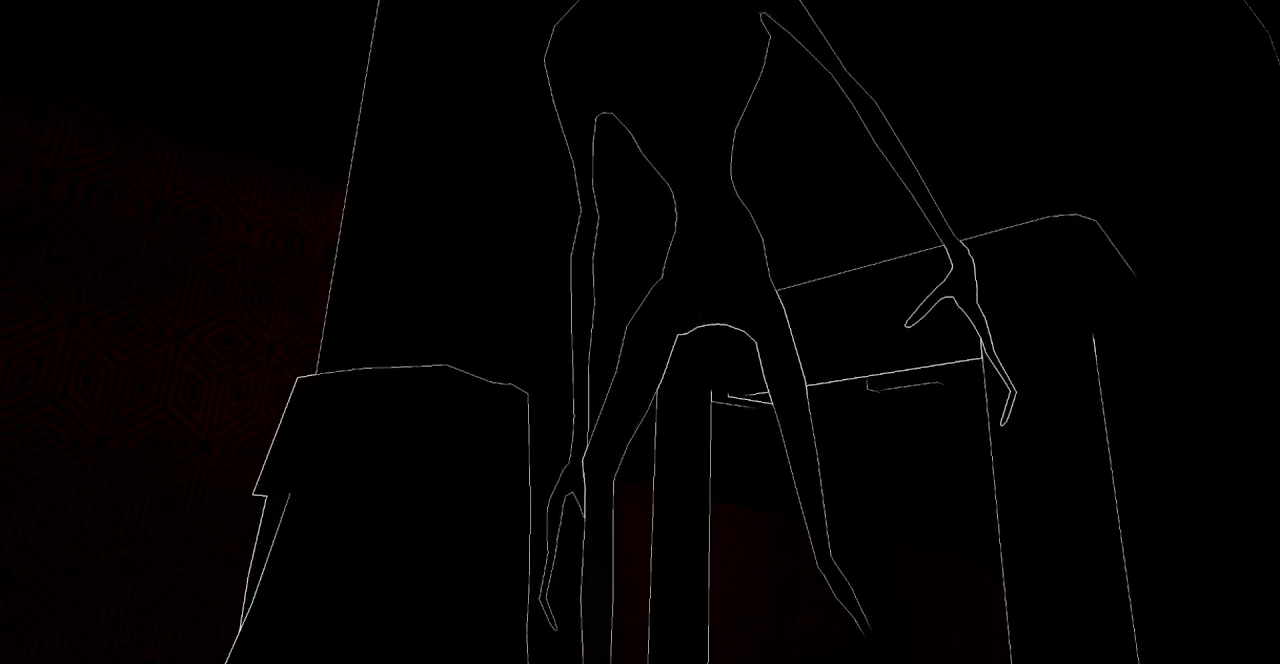
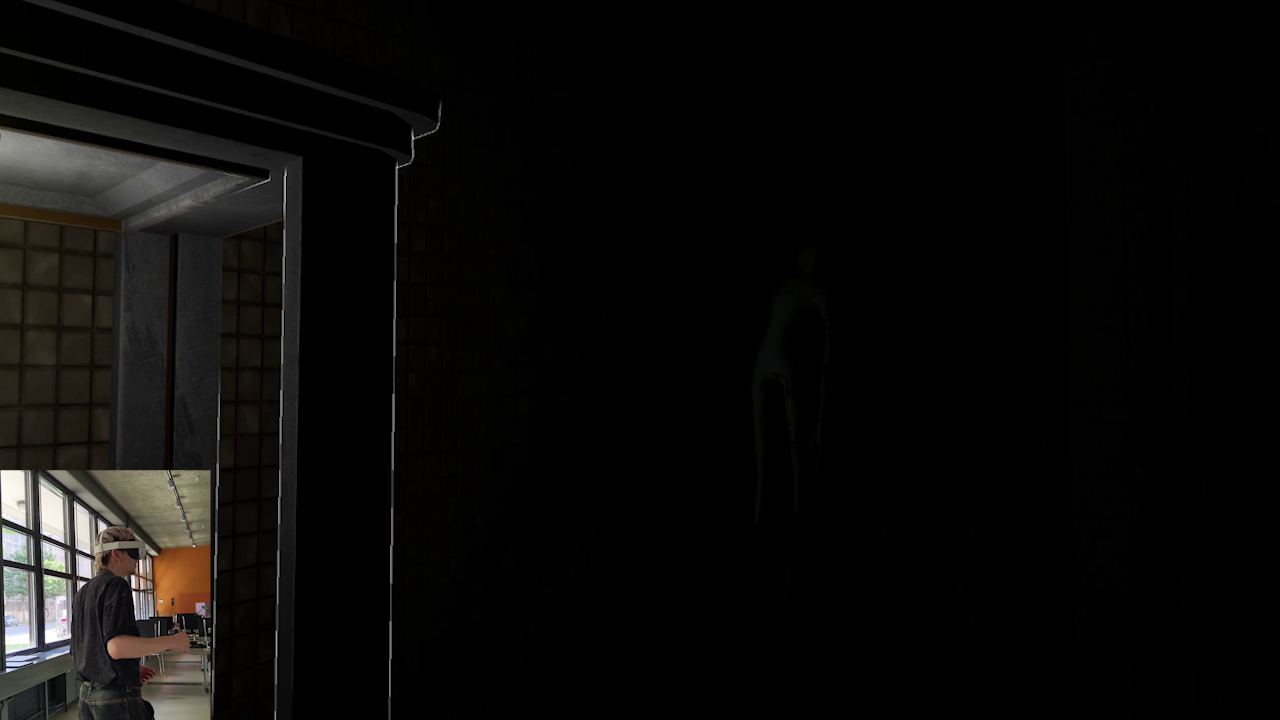
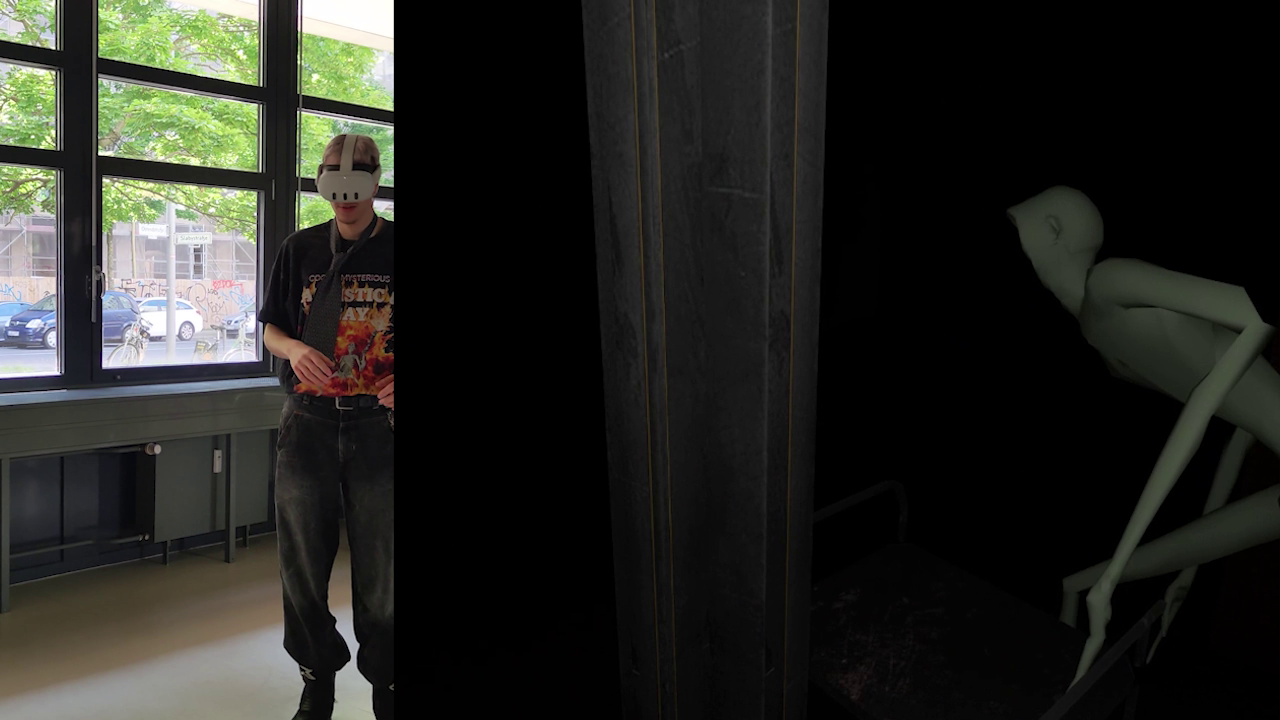
Be loud to see, but be quiet to not be catched by the entity - Dunkelkammer forces you to trust your instincts, your hearing, and your courage.
Level Design, System & Virtual Reality
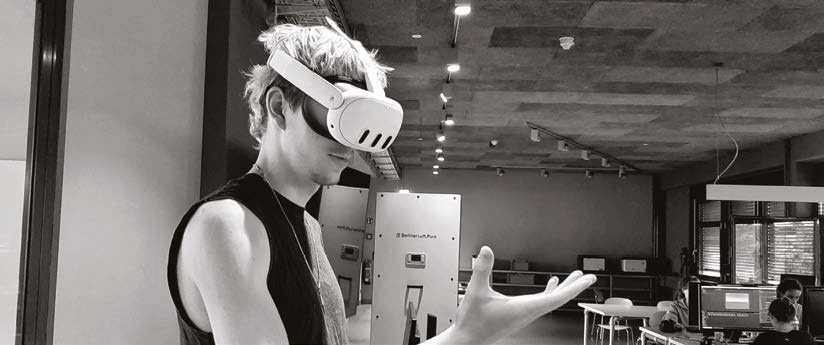
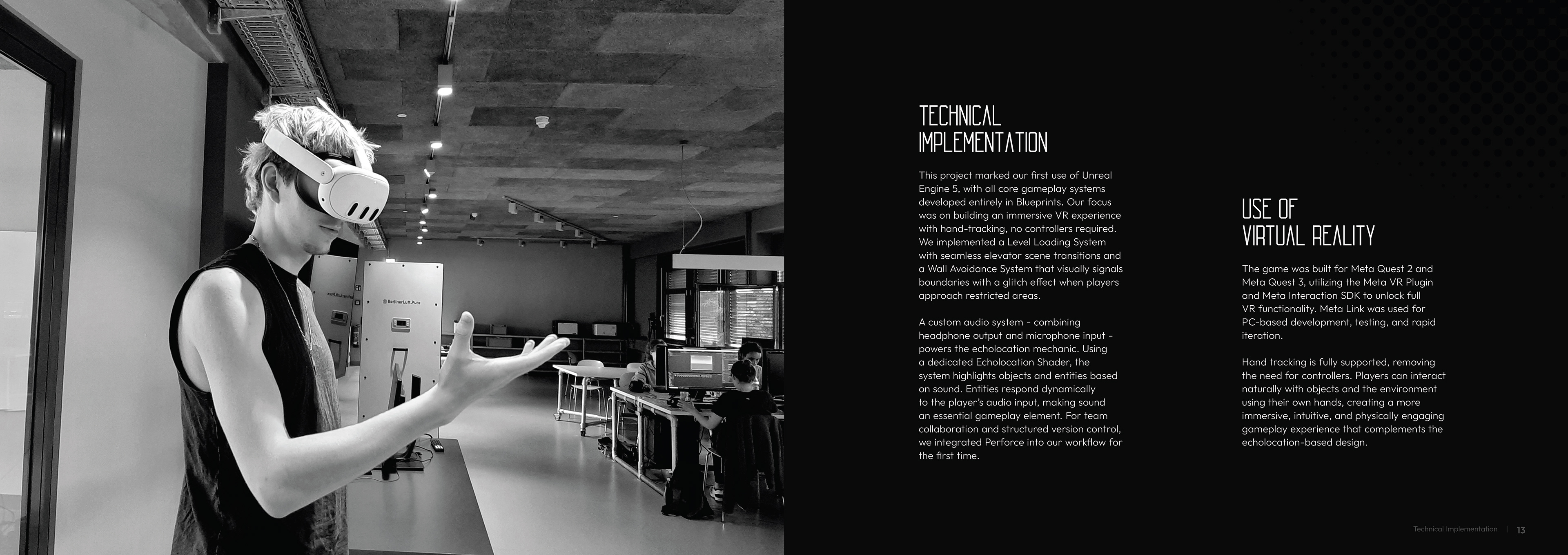
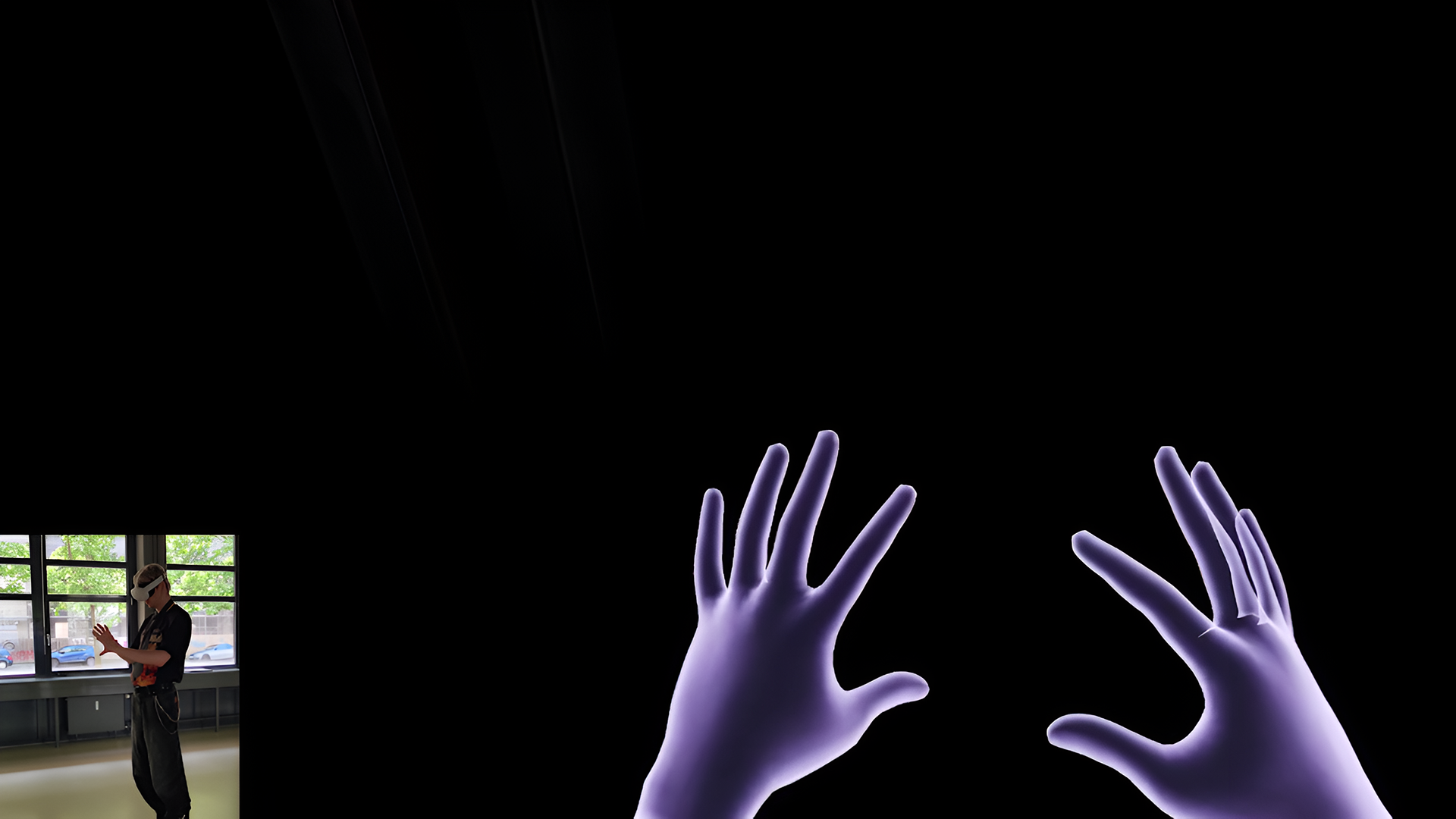
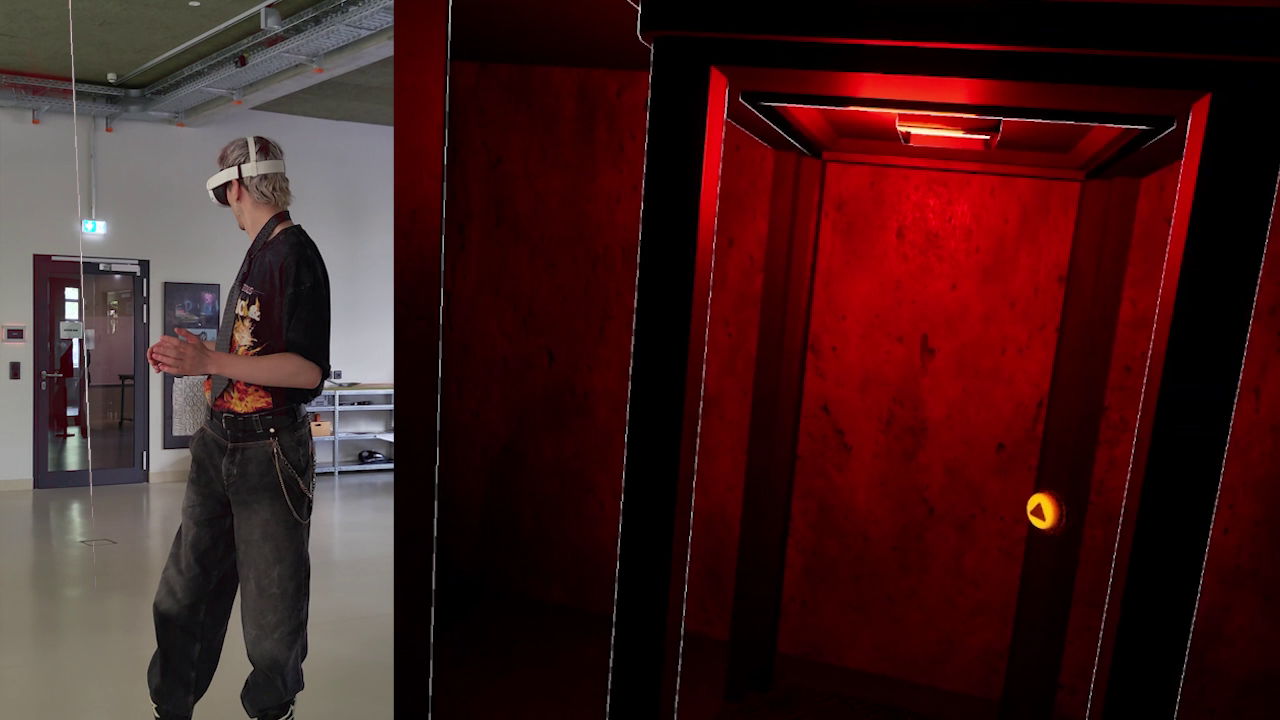
With Dunkelkammer we developed in about 3 weeks an experimental prototype in Unreal Engine for Virtual Reality. The game functions with hand-tracking and you explore dark, moody chambers. You can only see with echolocation lines, they get triggered by clapping your hands or speaking in the headset microphone. But if you are too loud, an entity will haunt you.
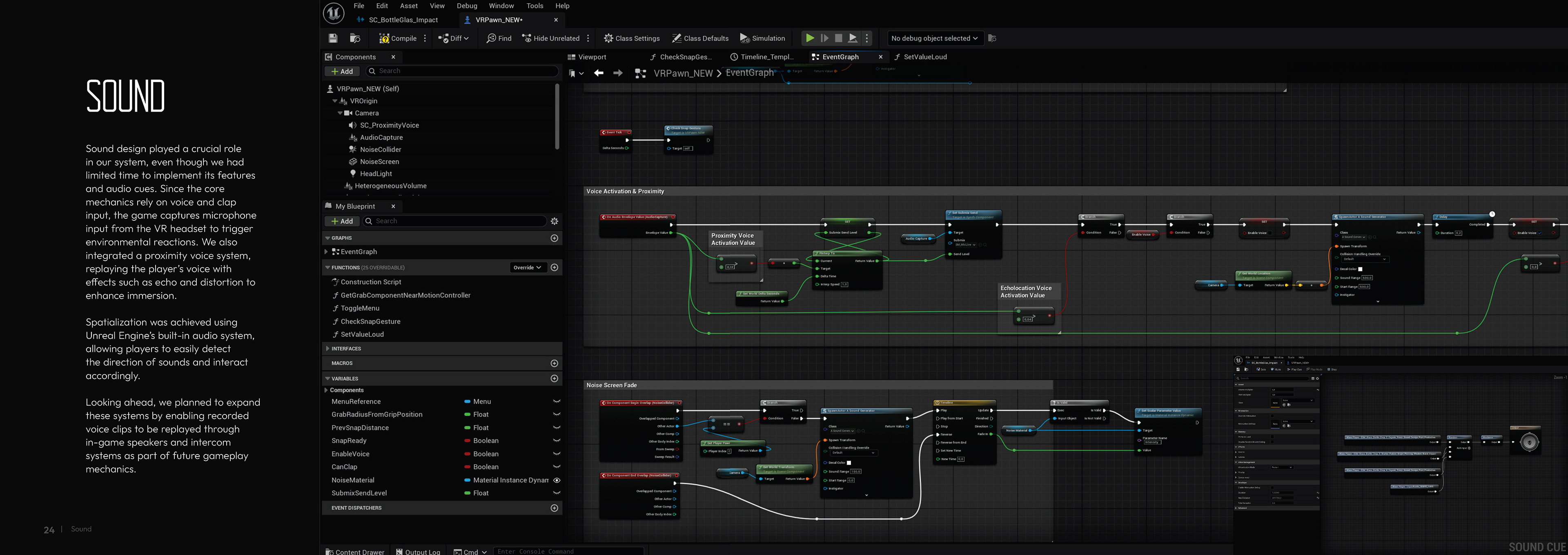
Since this was our first ever Unreal Engine and also Virtual Reality project, I experienced a lot of challenges and learnings. I was primarily responsible for making the concept functional in engine and design processes. I implemented the hand-tracking features, mic-input and recognition, multiple levels, the implementation of assets and visual effects and movement of the elevator, and also sound design and the proximity voice to hear an echo in-game.
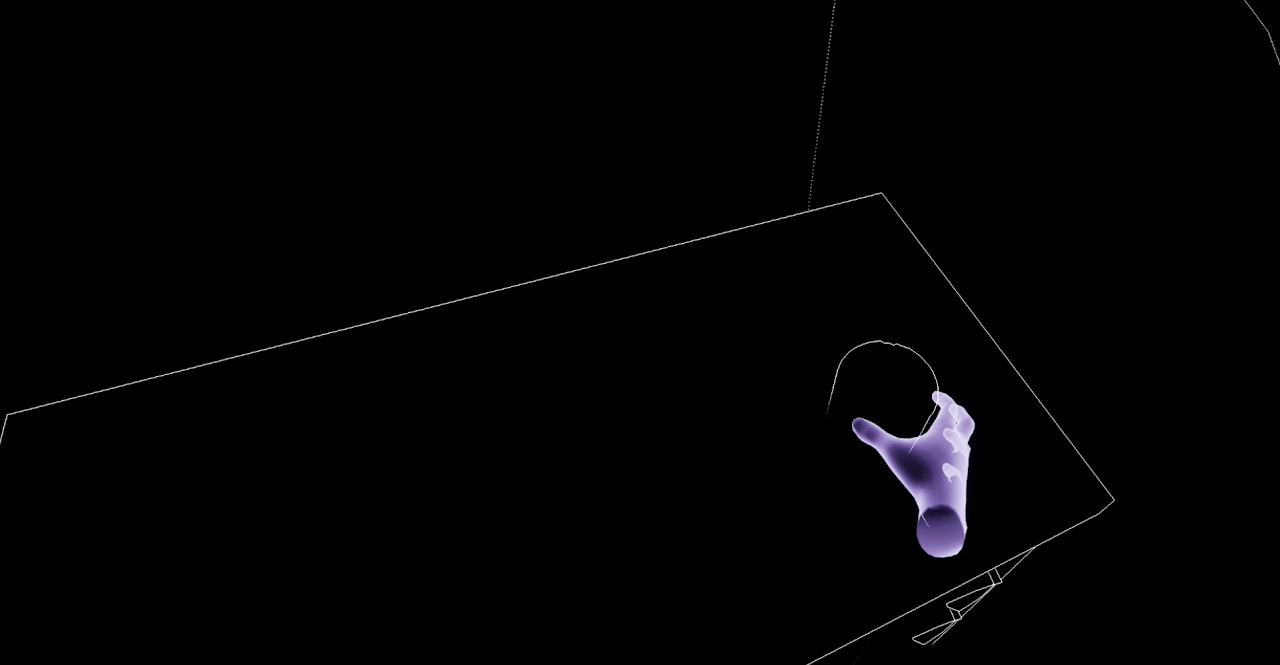
For the VR features, I implemented the Meta SDK and replicated grab, gesture and tracking functionality. I also implemented an wall avoidance feature that triggers a noise wall as soon as a player moves their head into the wall without noticing (because seeing pitch-black is the normal state).
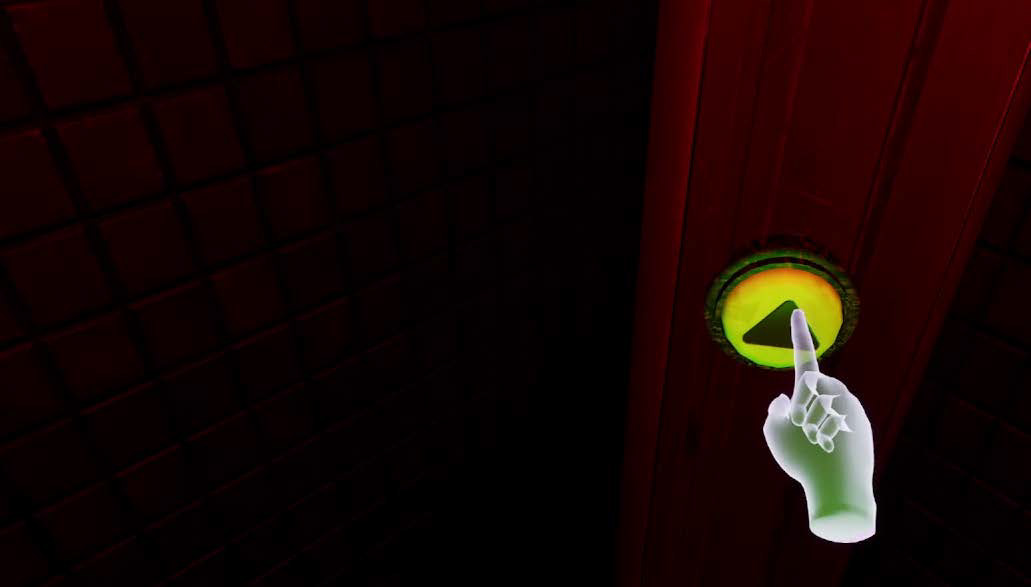
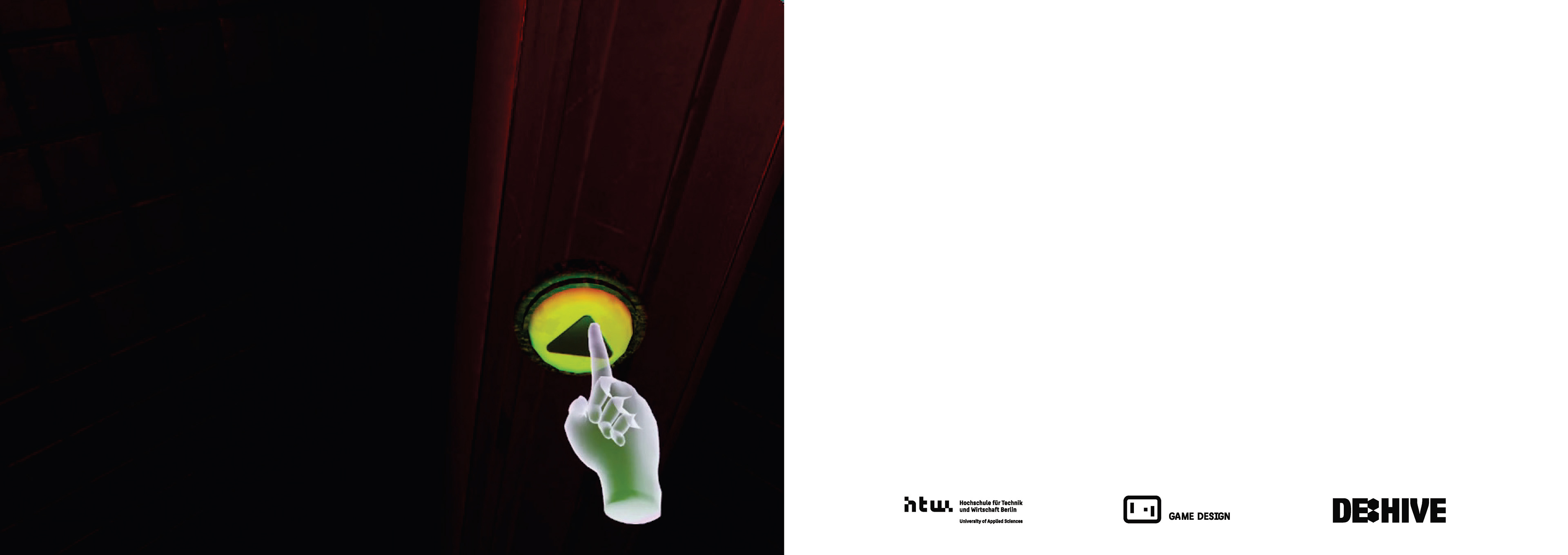
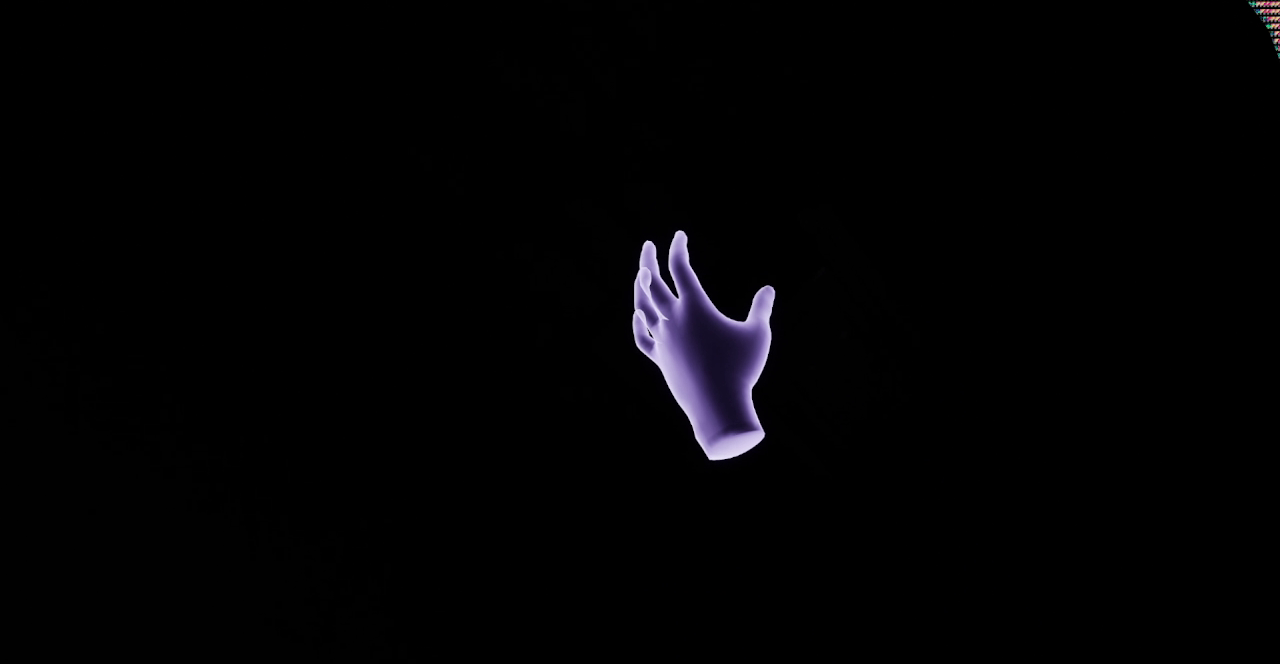
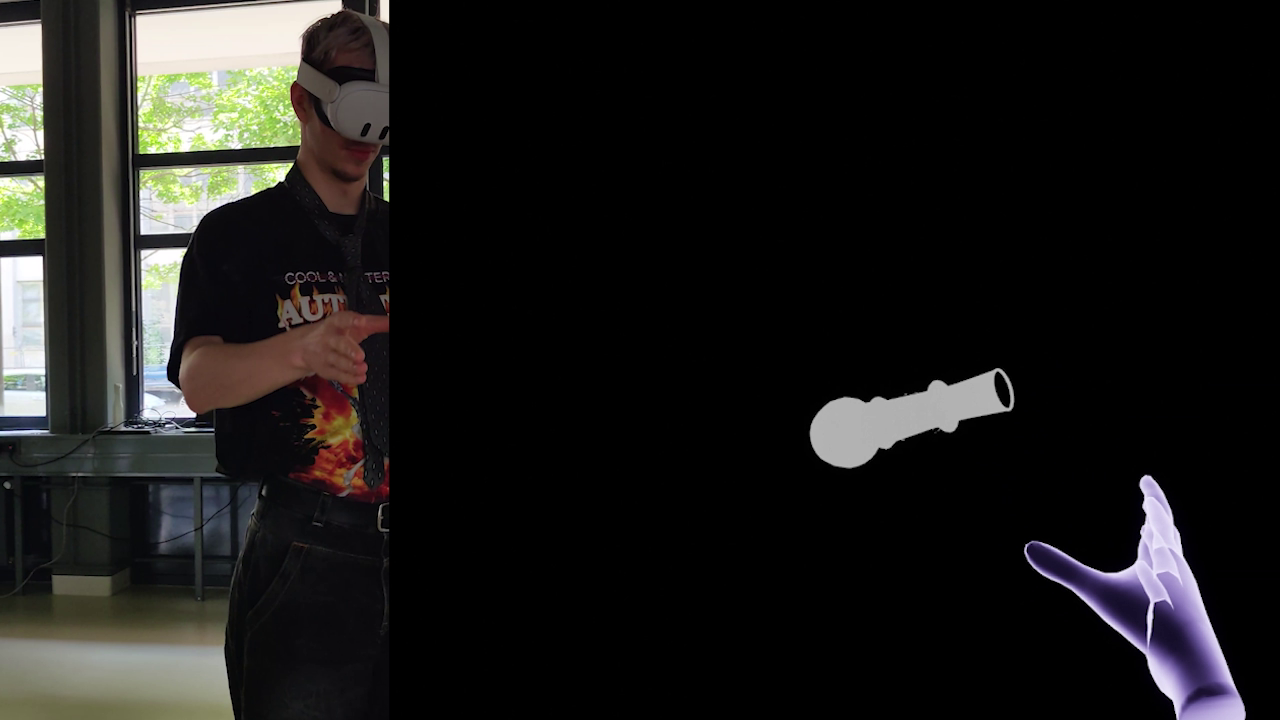
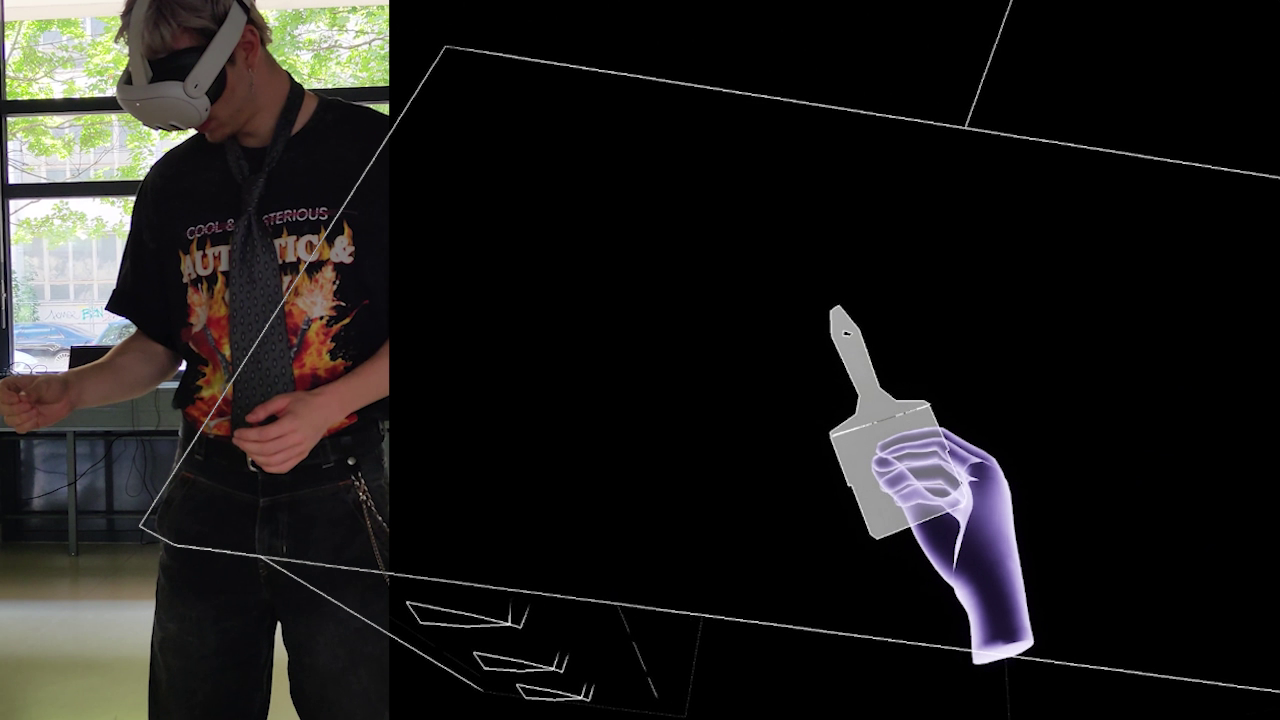
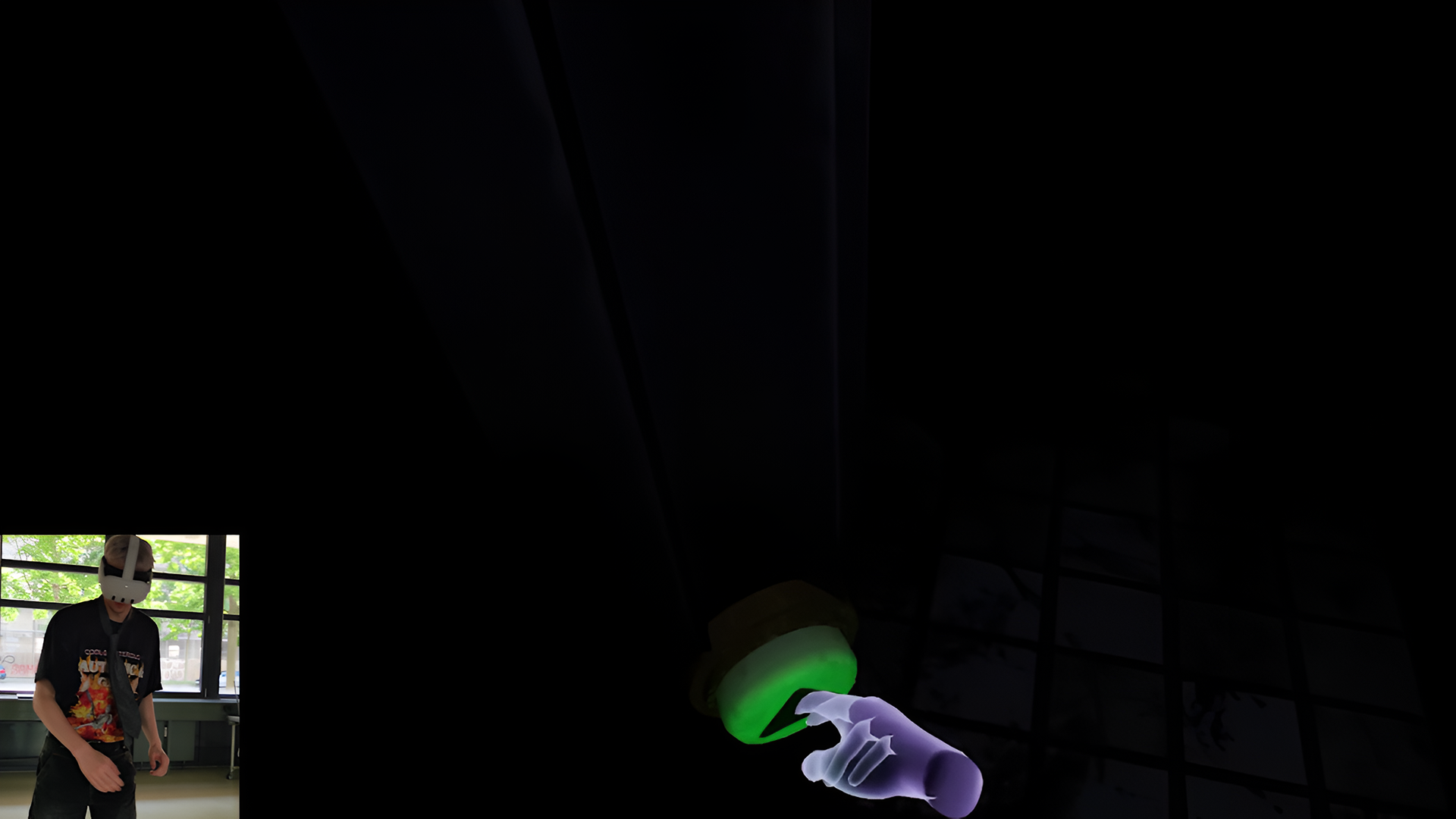
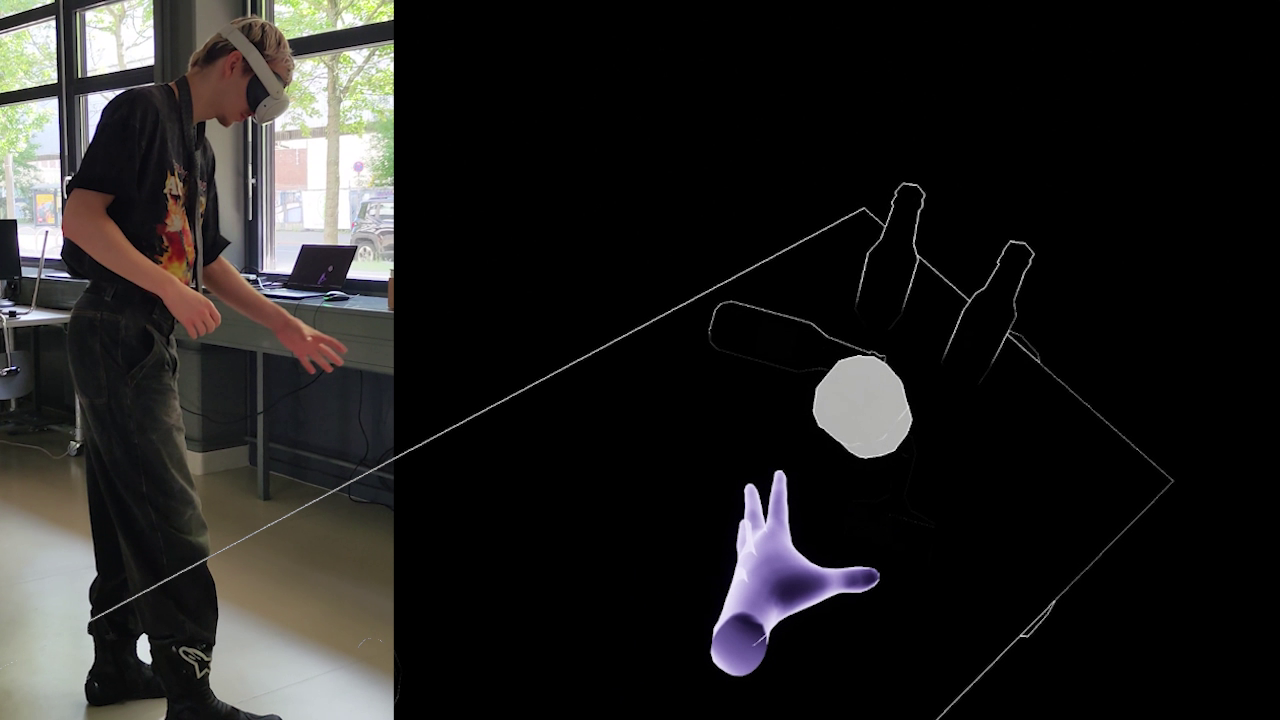
Interaction through hand-tracking
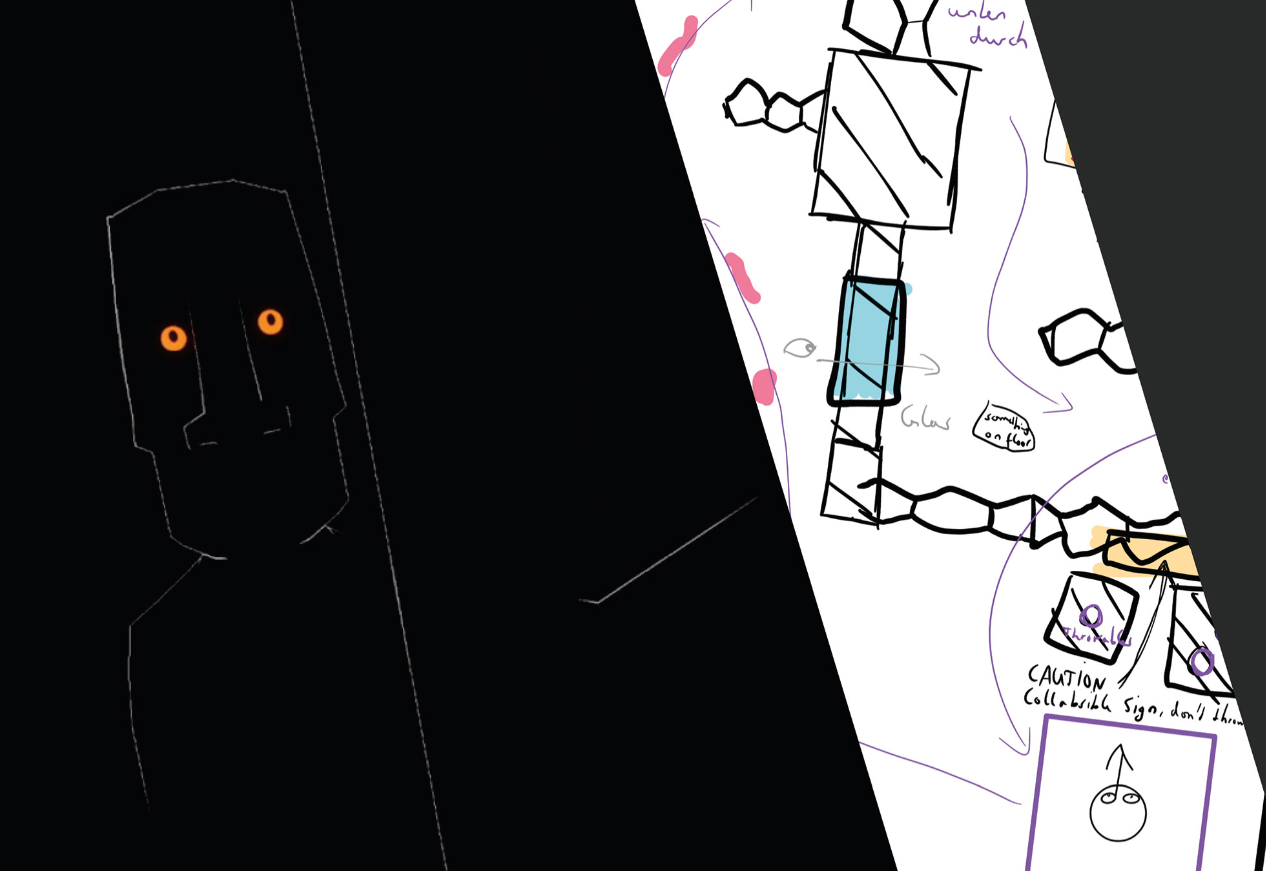
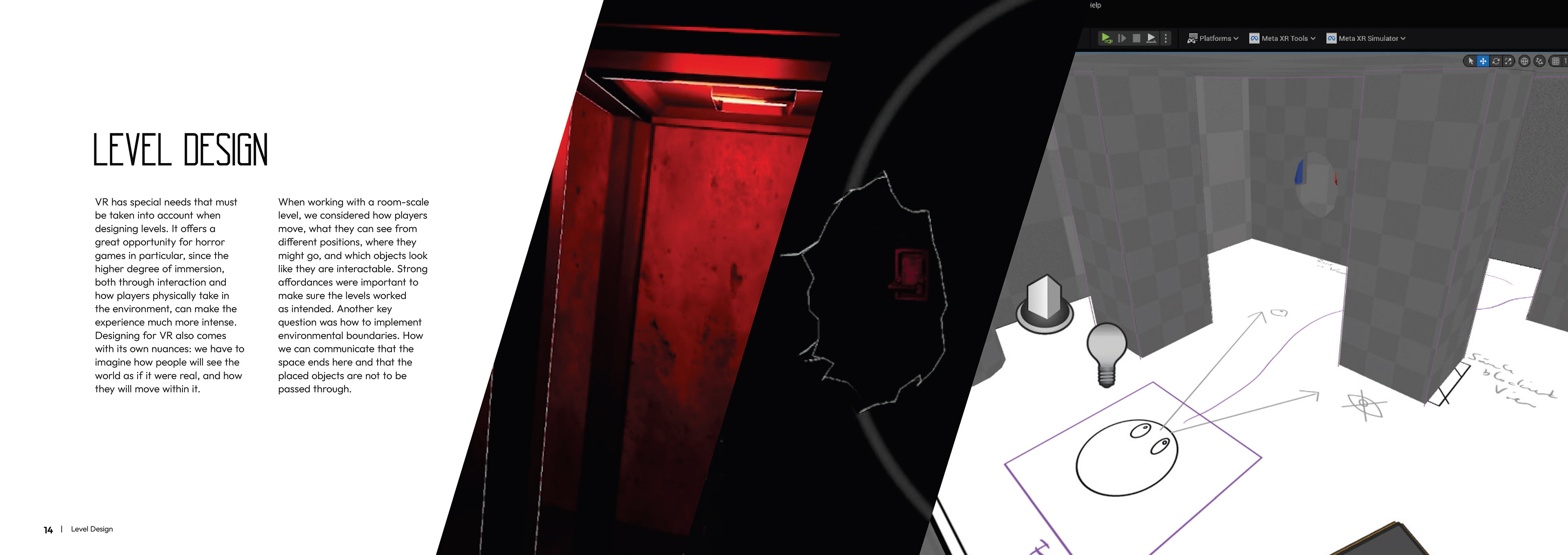
Level design in room-scale VR
Thinking out of the box
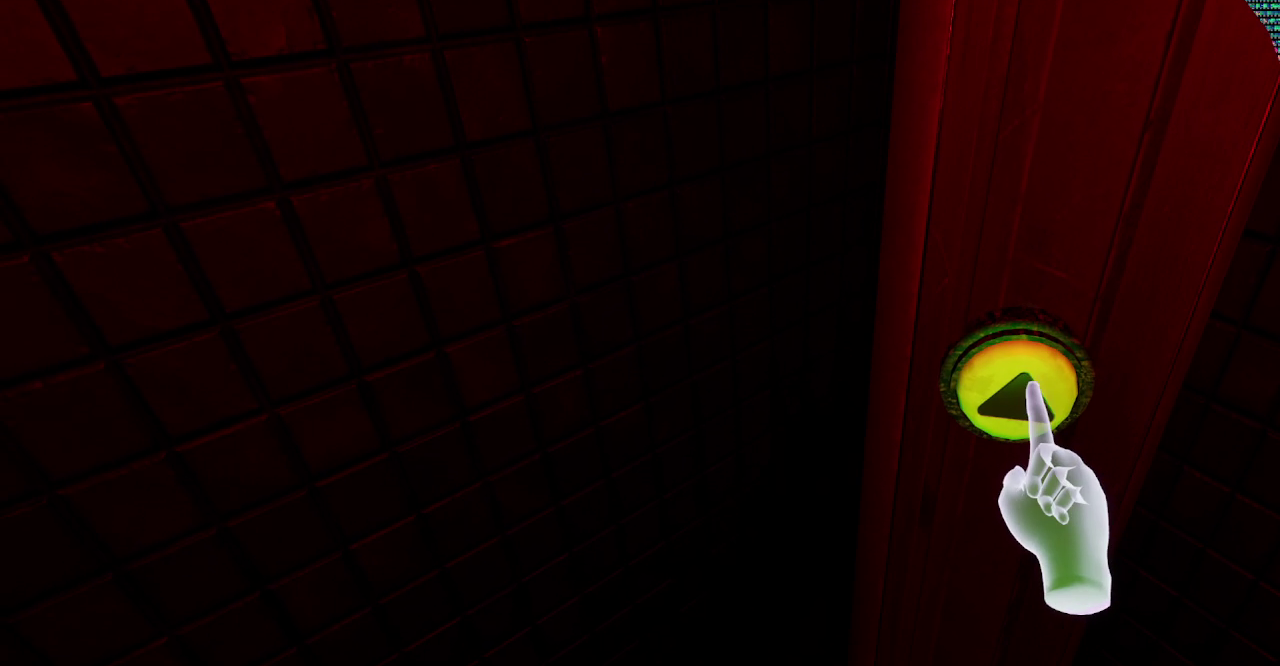
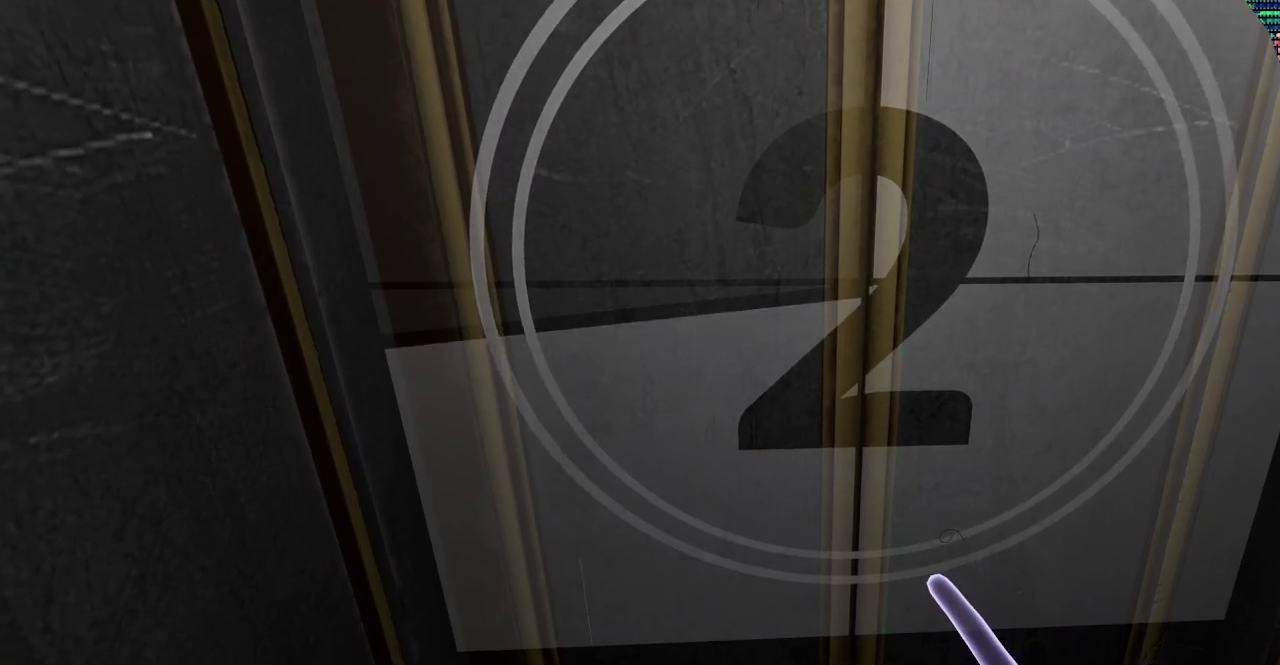
The level design for Dunkelkammer was an incredible experience. Since we were limited to real-scale VR and therefore a fixed space, the challenge of creating interesting and a big variety of levels was always present. By implementing „Intermediate Levels“, I created a system to make different level starting points fluid and possible. Therefore after a played-through level, the elevator drives into a empty room with a second elevator as the next level starting point. After that the „real“ next level loads.
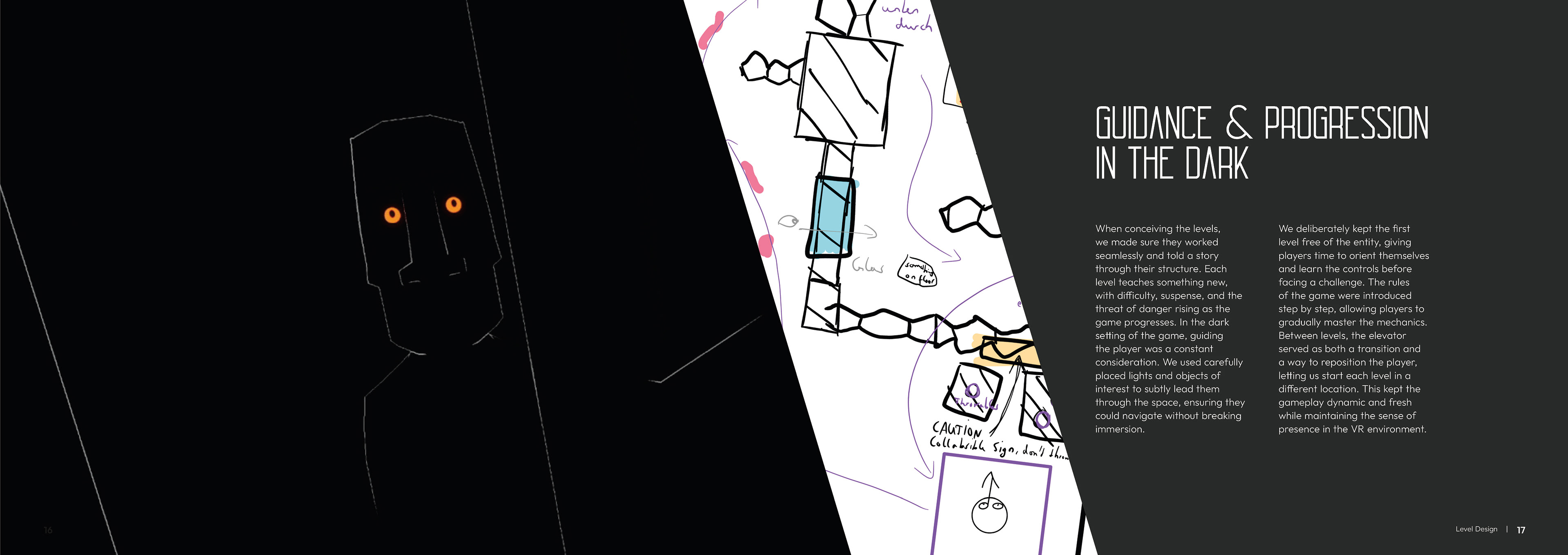
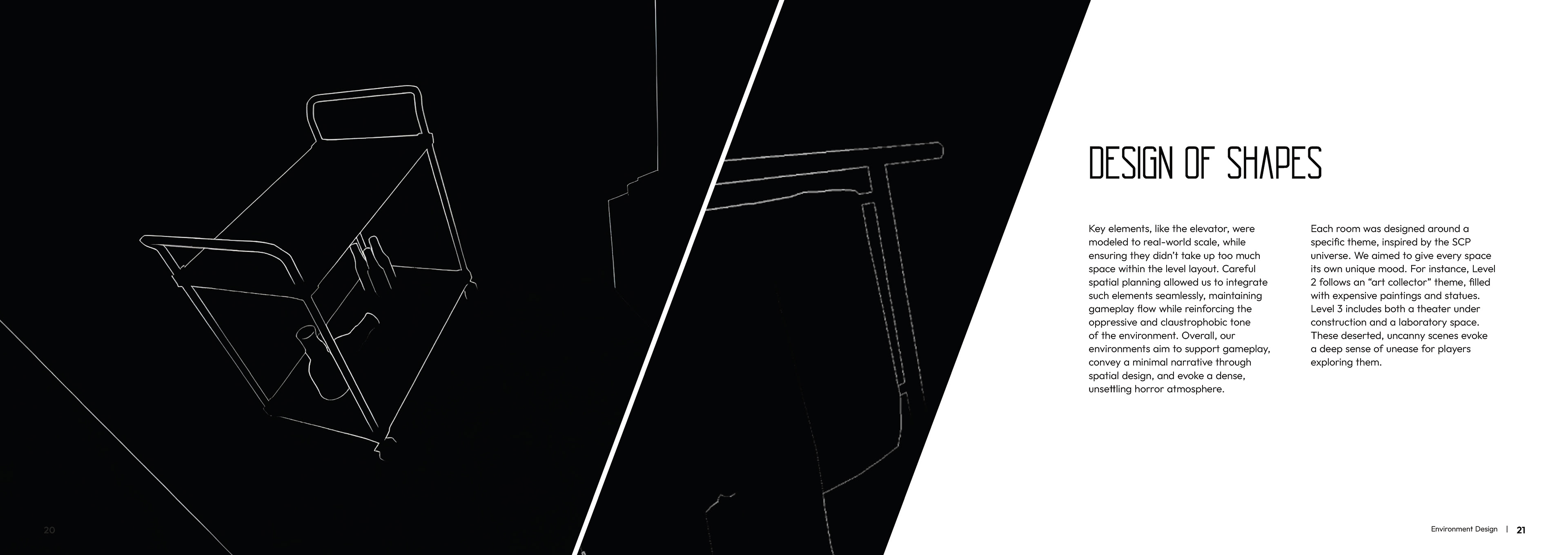
The guidance was also very limited, since I couldn‘t just place lights in the dark levels. So we had to work with shape languages and points of interests by the echolocation outline shader. I placed objects to make sure to grab the players attention, I implemented sound cues to guide through levels or even make players avoid areas, and I created tension by placing walls and objects as guidance elements.
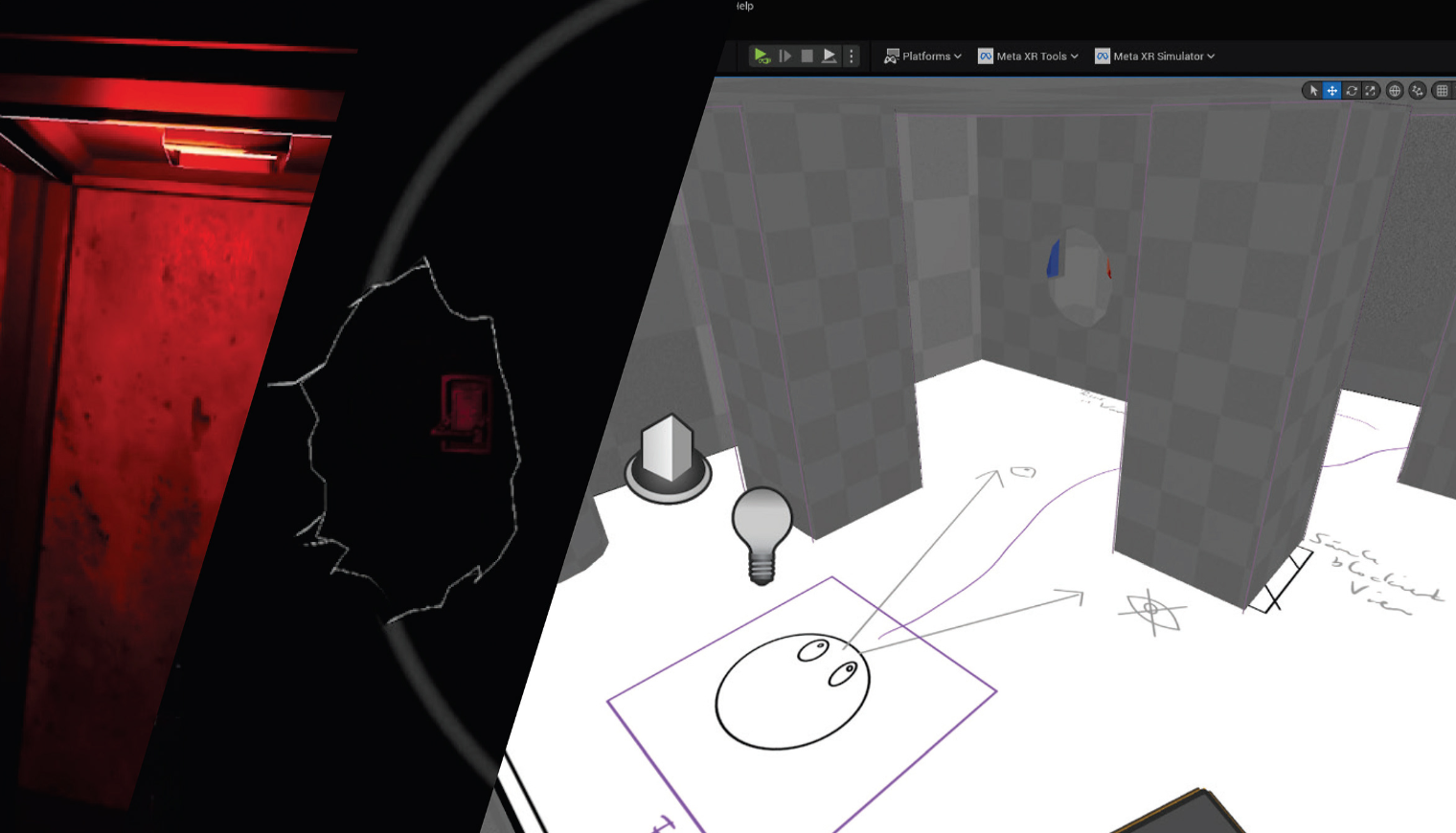
Applying level layouts to the prototype
Immersion in VR
By creating realistic sound scapes and handmovement, the world seems quite scary by just standing in the environment itself. But if you then realise that the microphone input is hearable and effected with echo in-game, you get fully immersed into the experience.
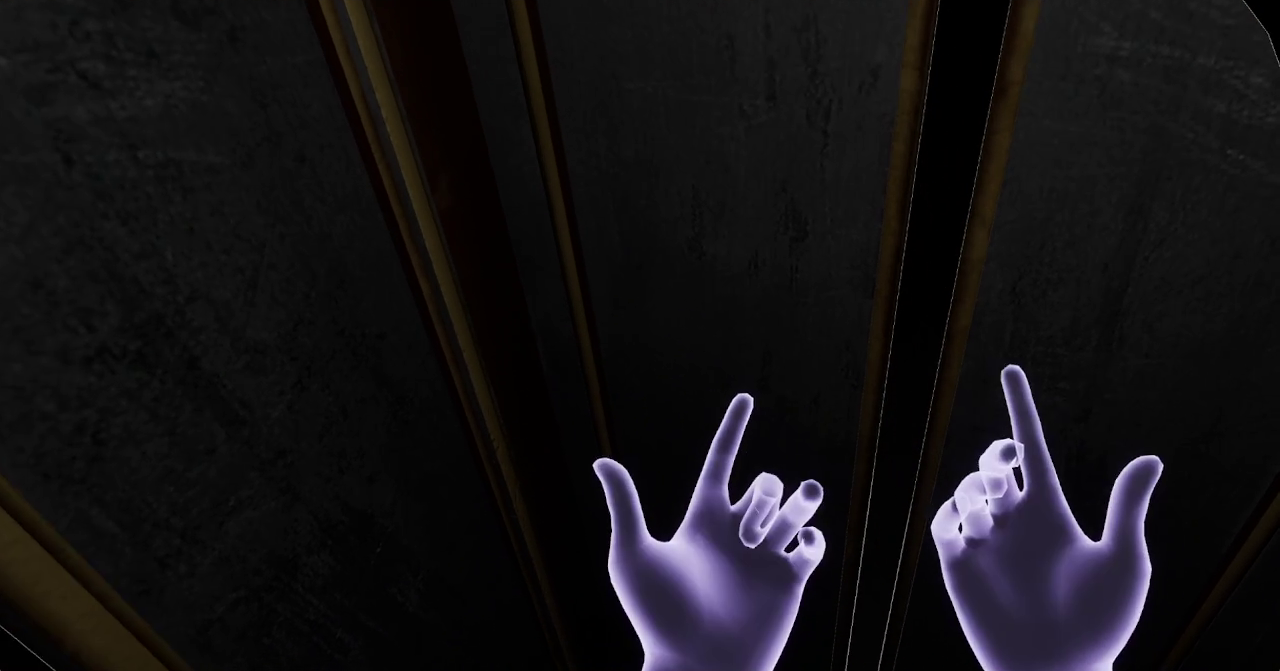
The implementation of proximity voice was therefore something I‘m very proud of. Also the interaction with objects feels fluent and immersive, since there are no controllers at all required to play Dunkelkammer.
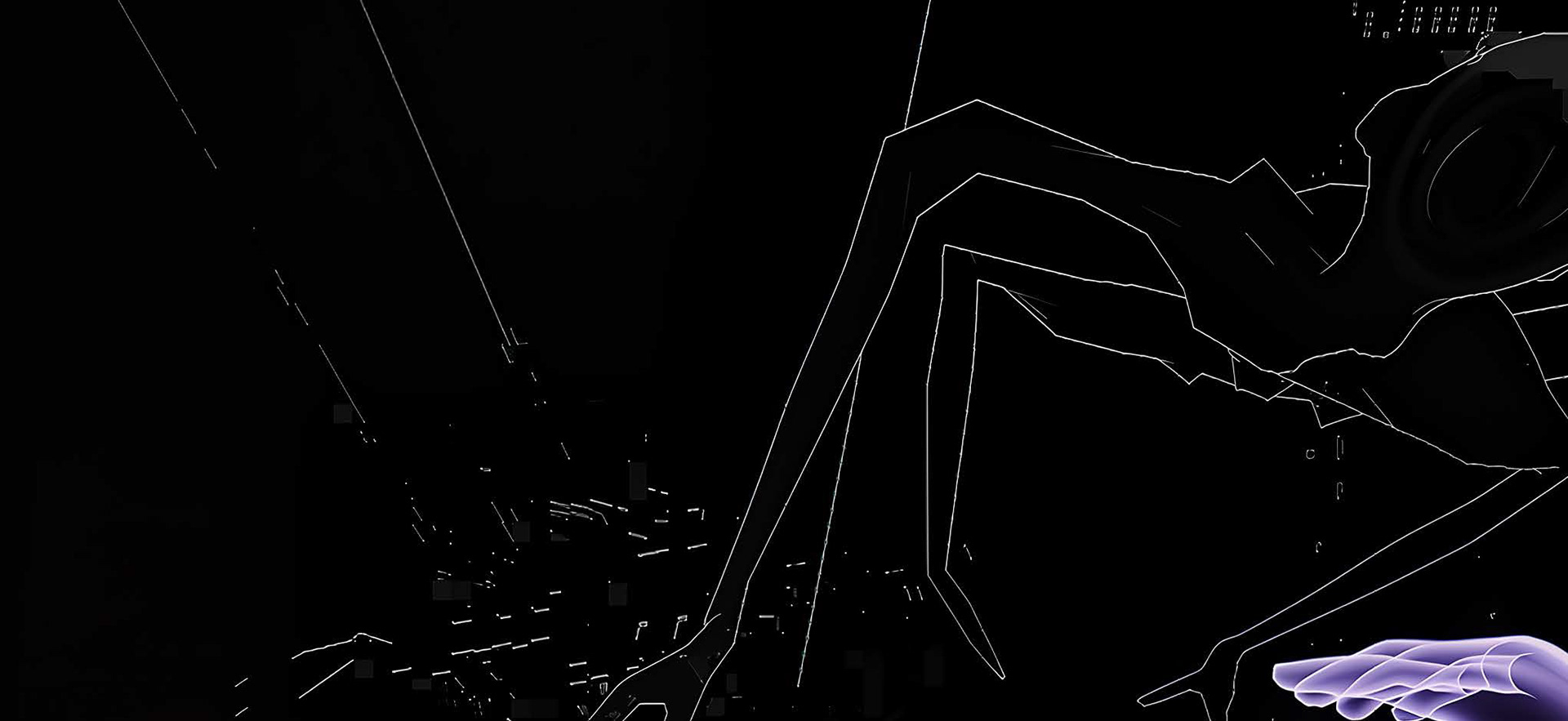
Playing with fear in darkness
My roles:
Level Design, System, Blueprints & Engine, Sound Design, Technical Art, VFX
Level Design, System, Blueprints & Engine, Sound Design, Technical Art, VFX
Tools:
Unreal Engine 5, Meta VR SDK, Perforce
Unreal Engine 5, Meta VR SDK, Perforce
Time:
3 weeks
3 weeks
Team:
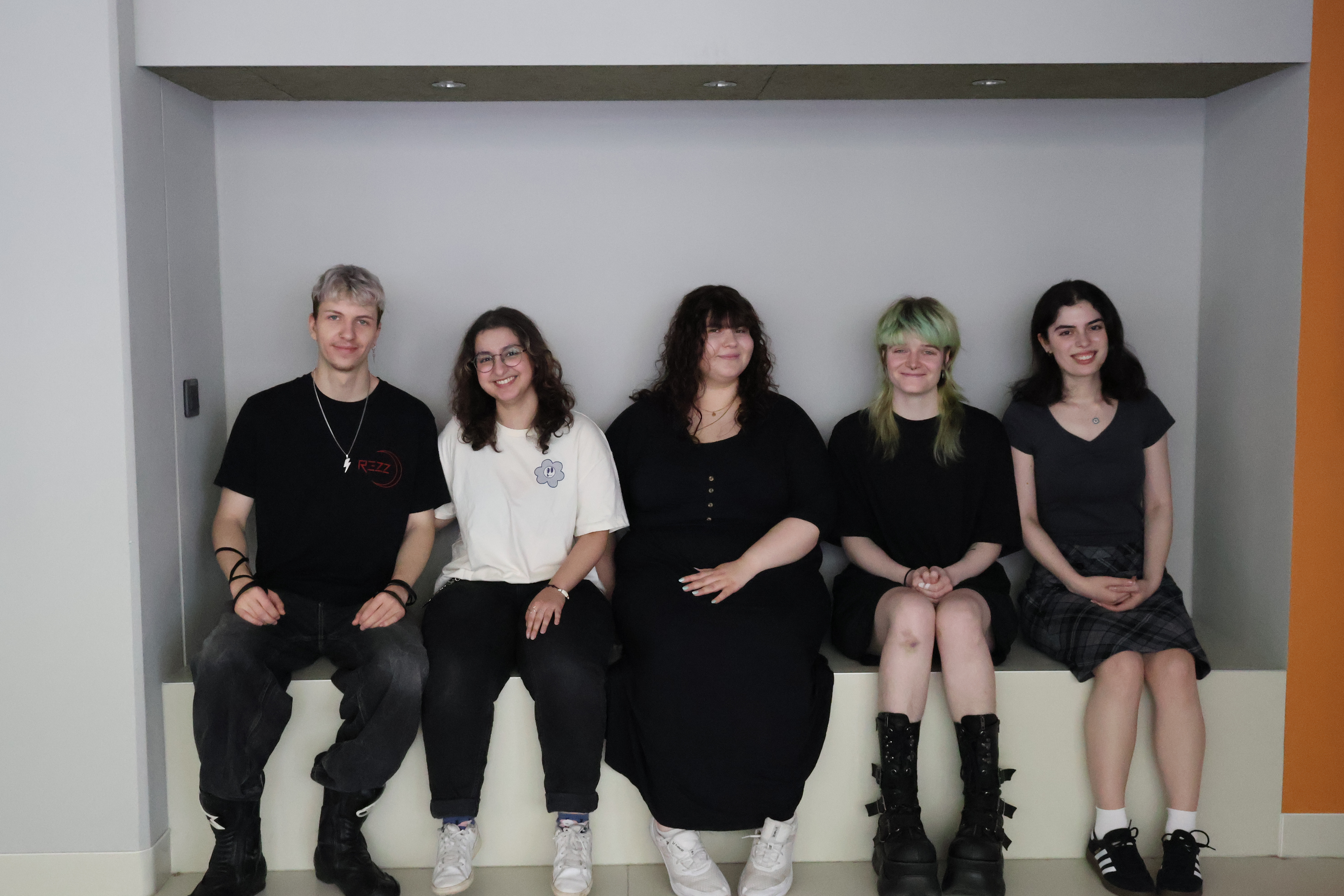
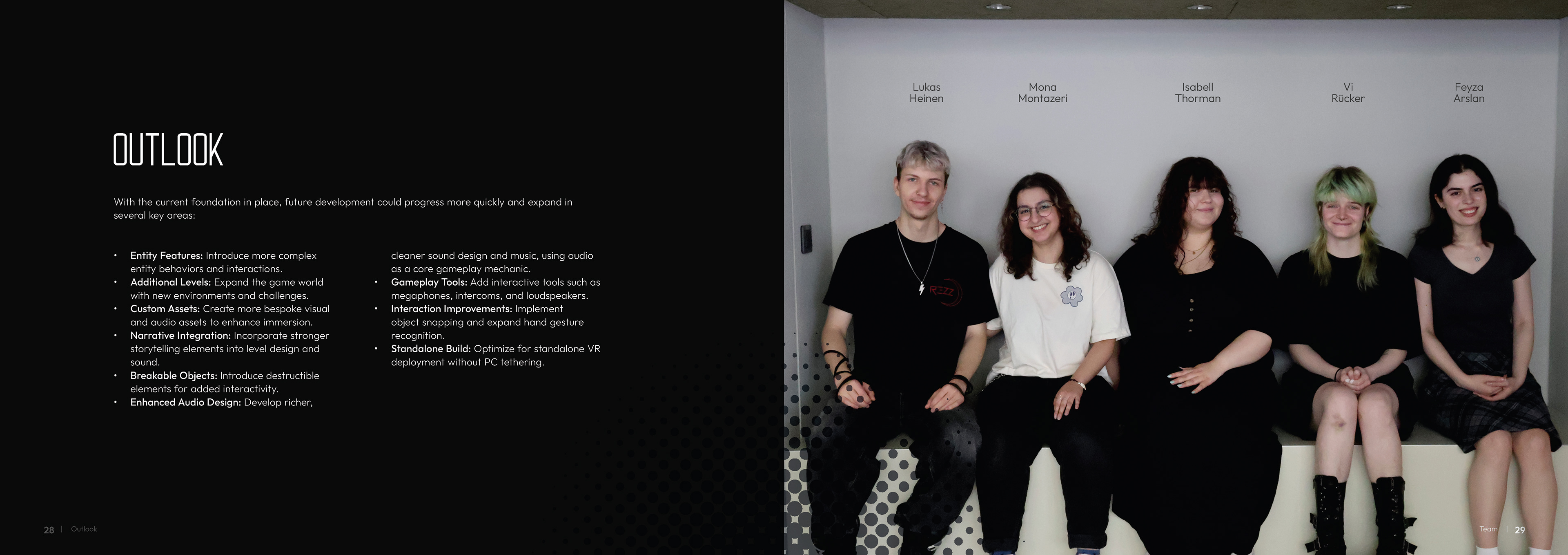
Lukas Heinen, Mona Montazeri, Isabell Thorman, Vi Rücker and Feyza Arslan (LuMoIsViFe)
Lukas Heinen, Mona Montazeri, Isabell Thorman, Vi Rücker and Feyza Arslan (LuMoIsViFe)
Development of Dunkelkammer
Screenshots


Production
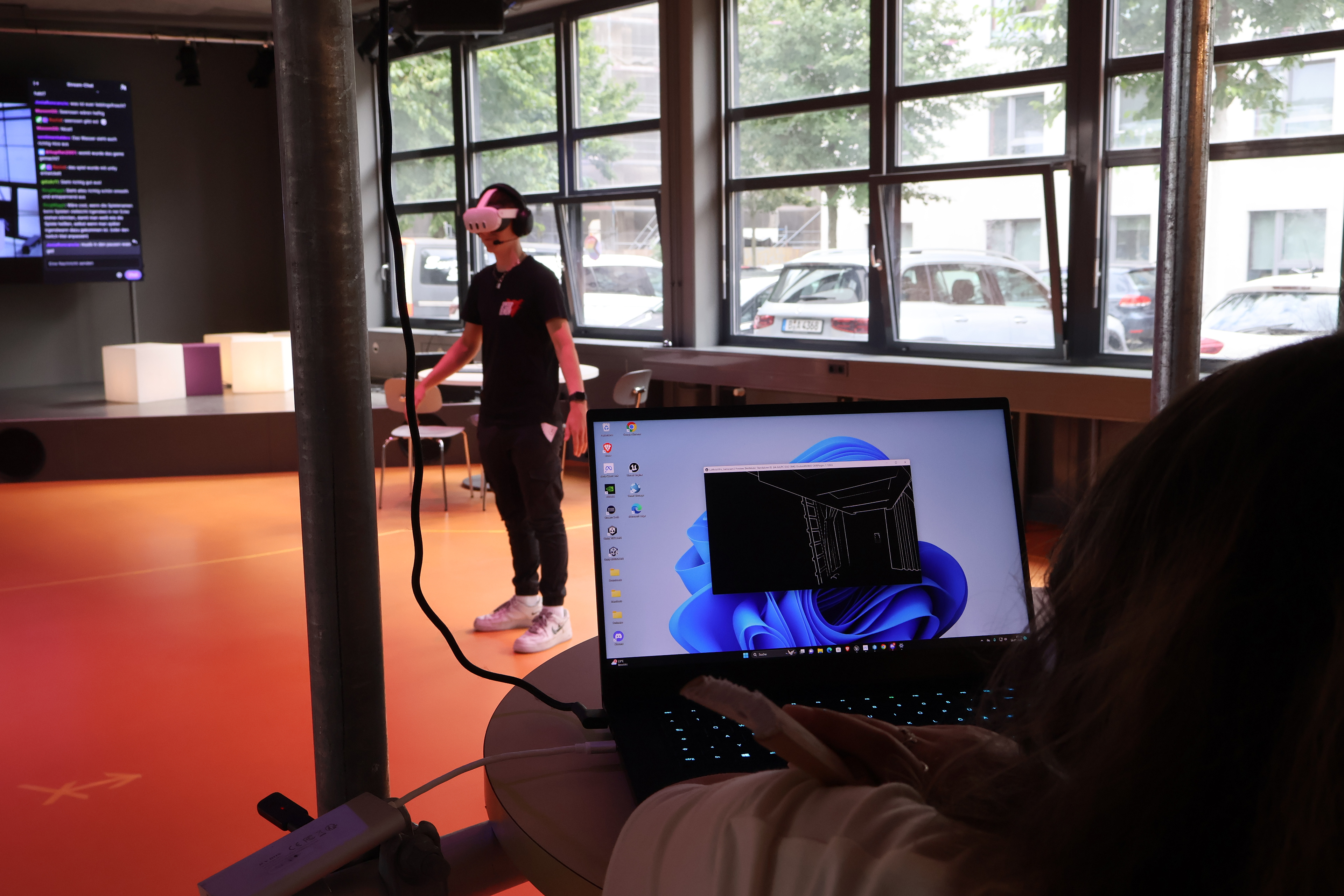
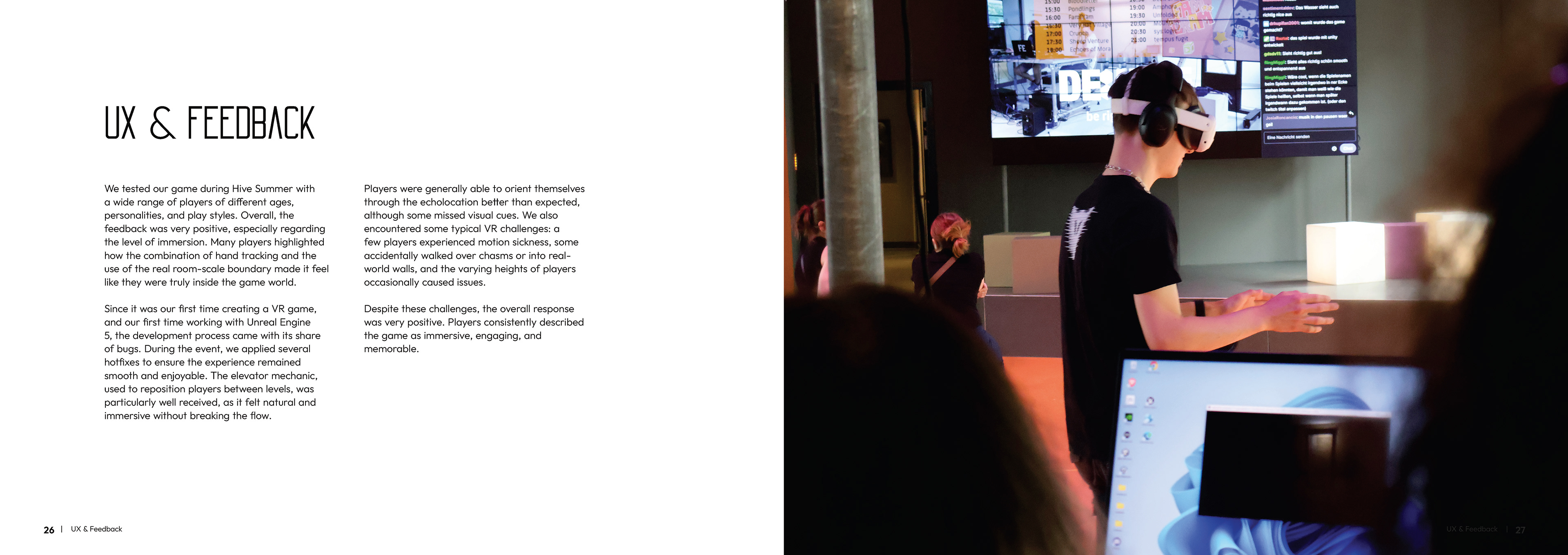
Playtest at HIVE SUMMER
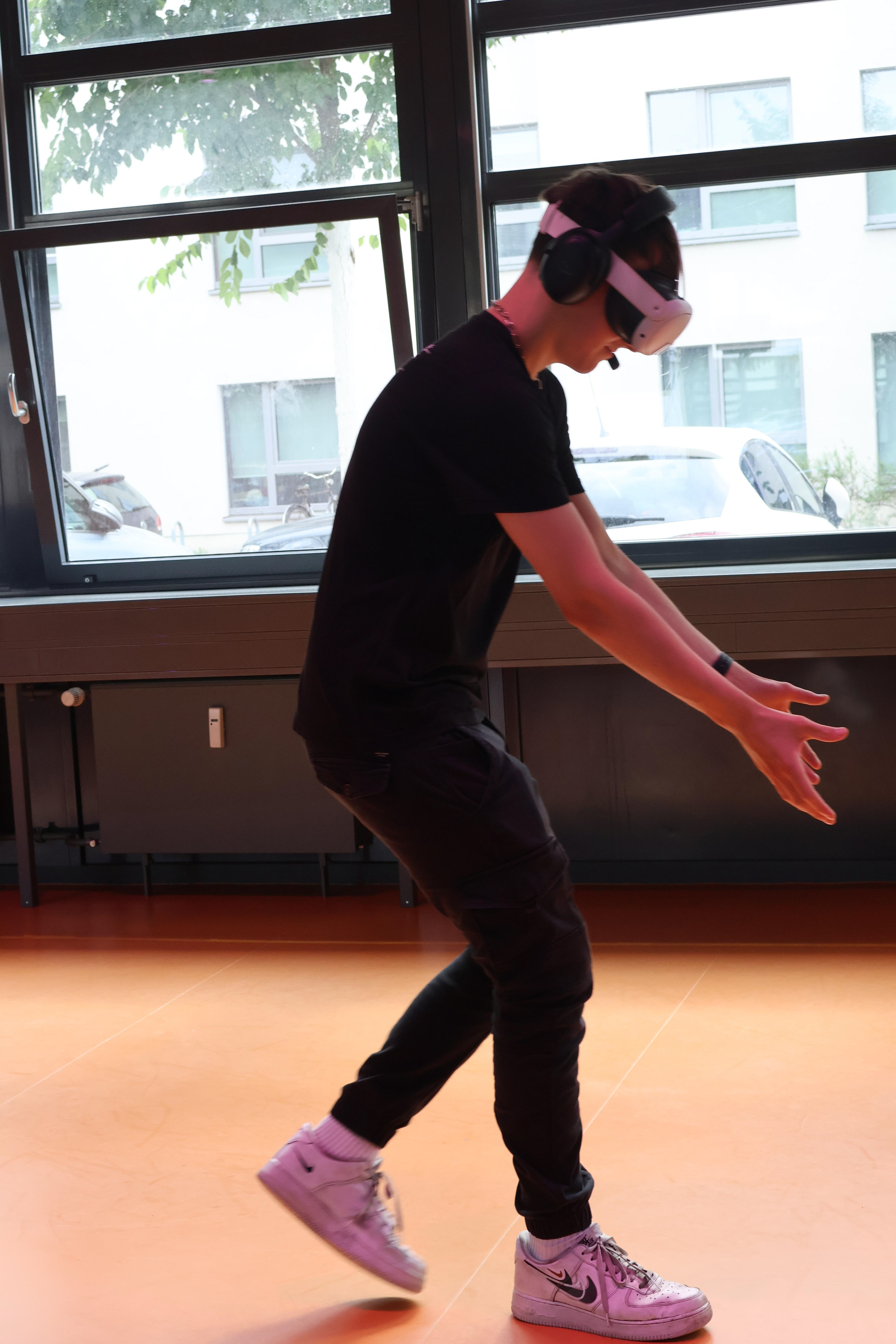
Playtest at HIVE SUMMER
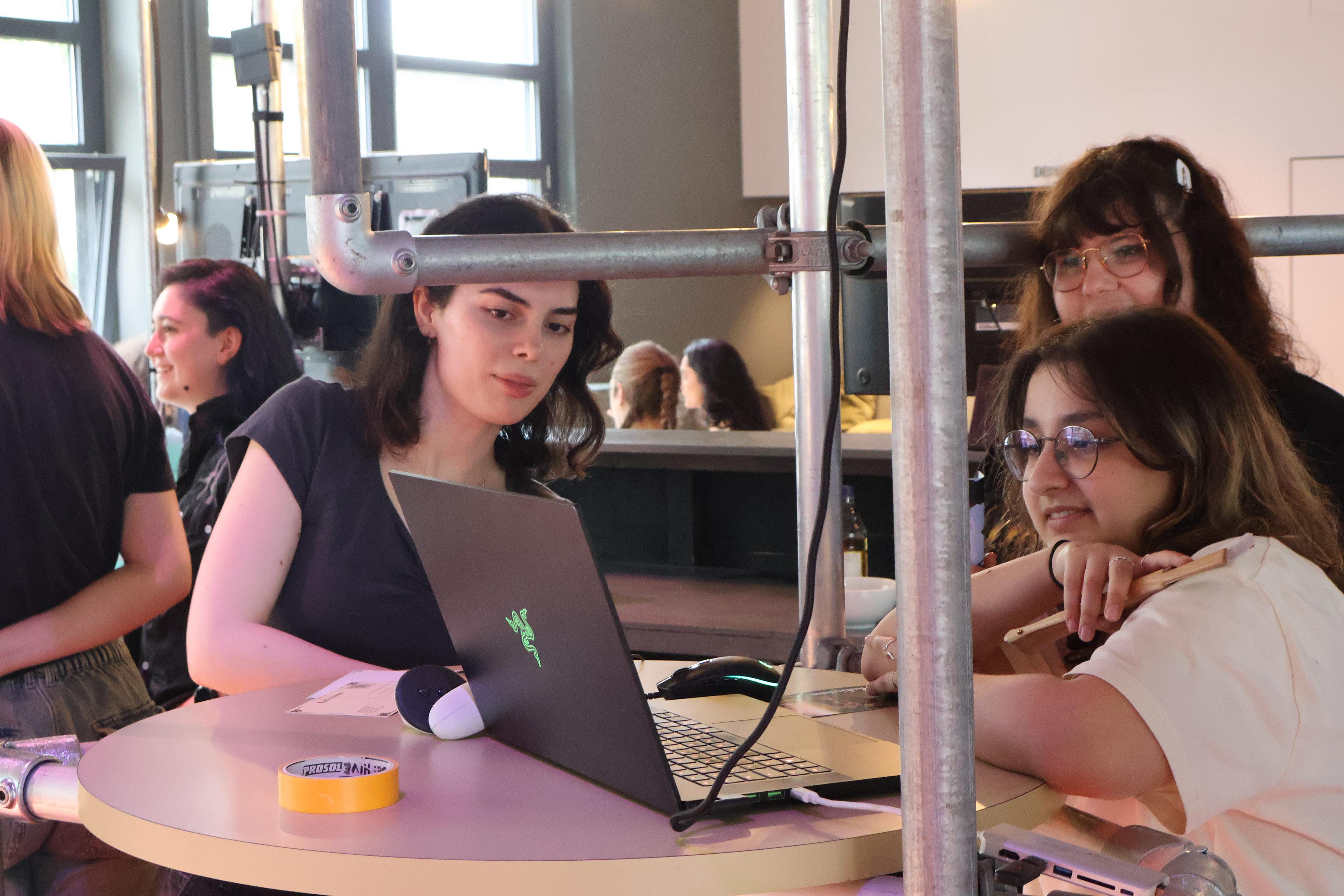
Playtest at HIVE SUMMER
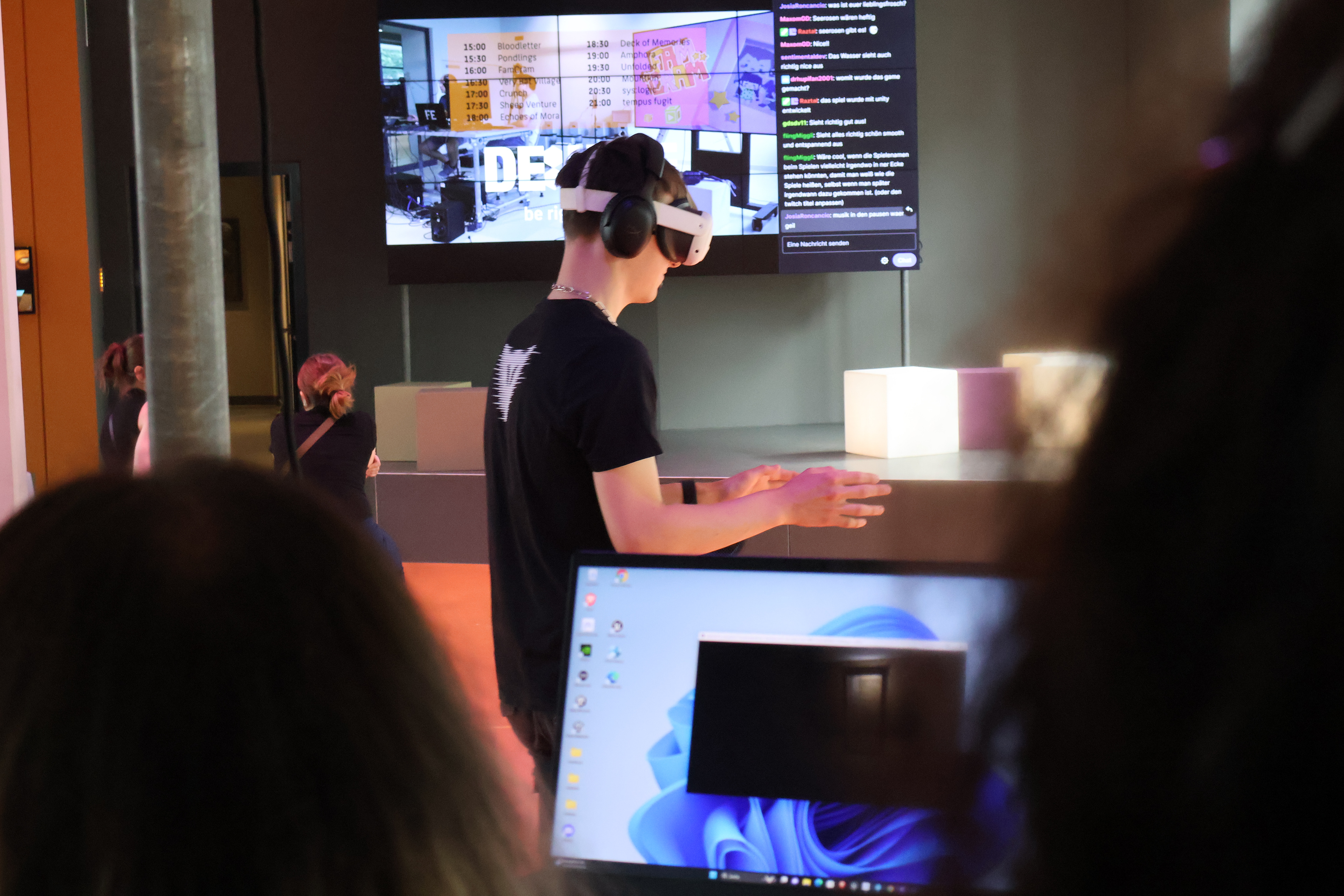
Playtest at HIVE SUMMER
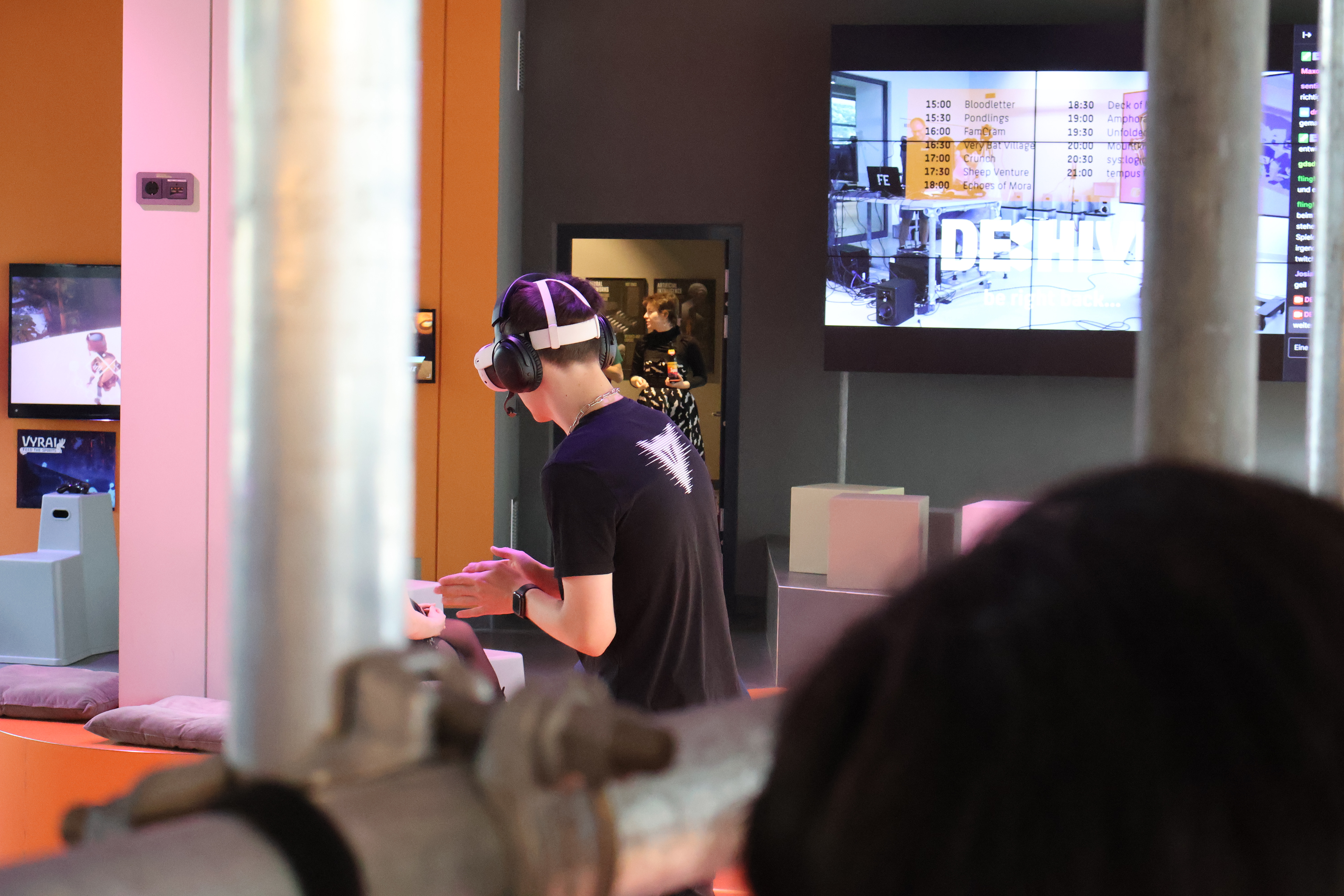
Playtest at HIVE SUMMER
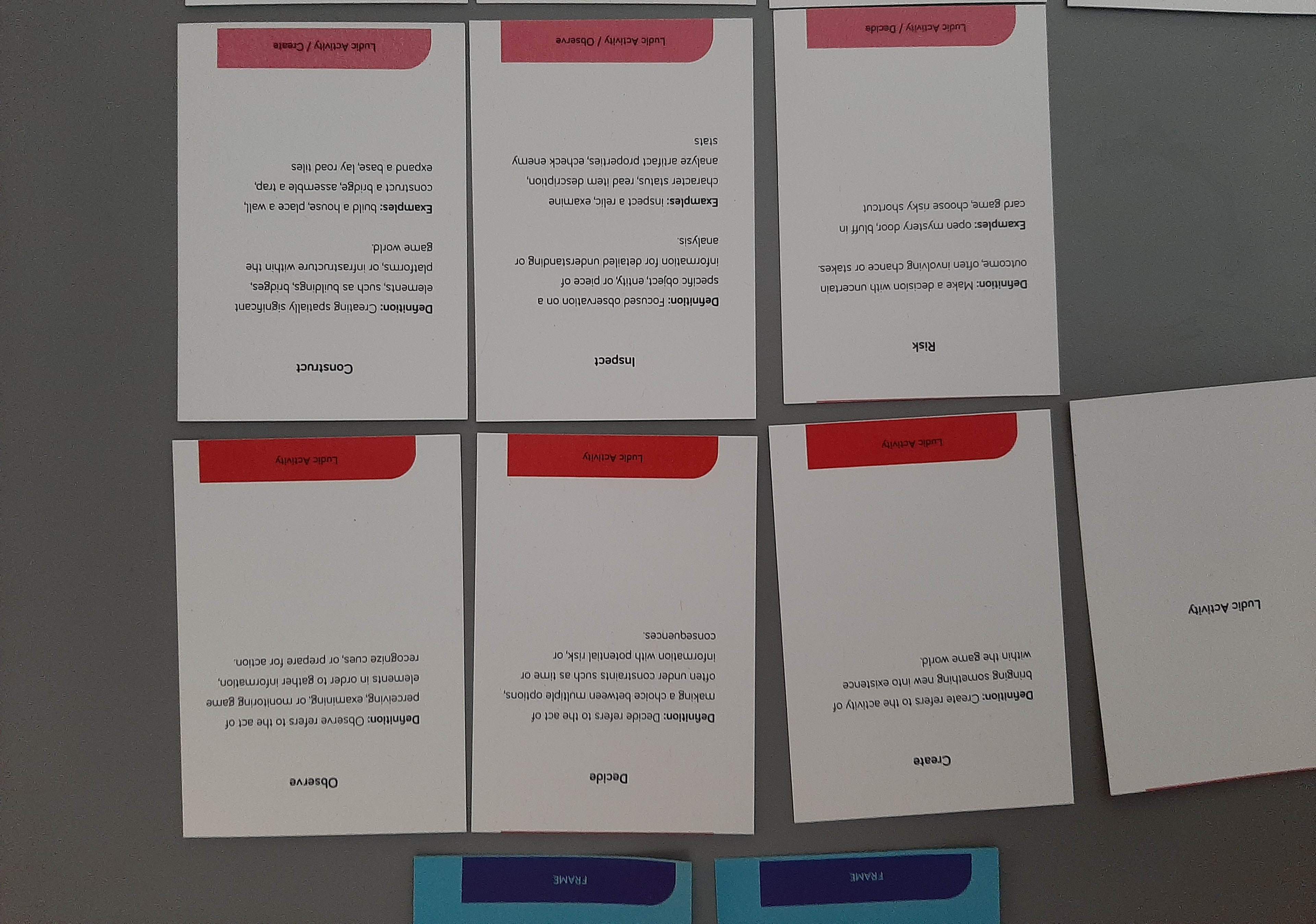
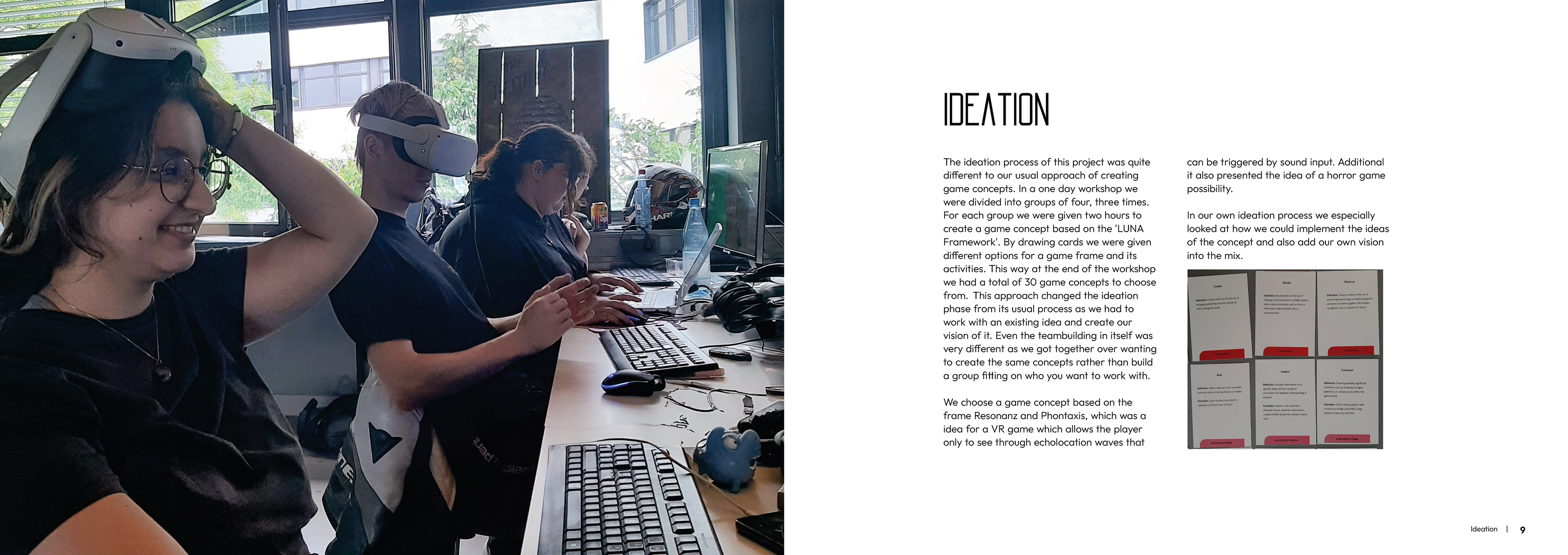
LUNA Framework Ideation
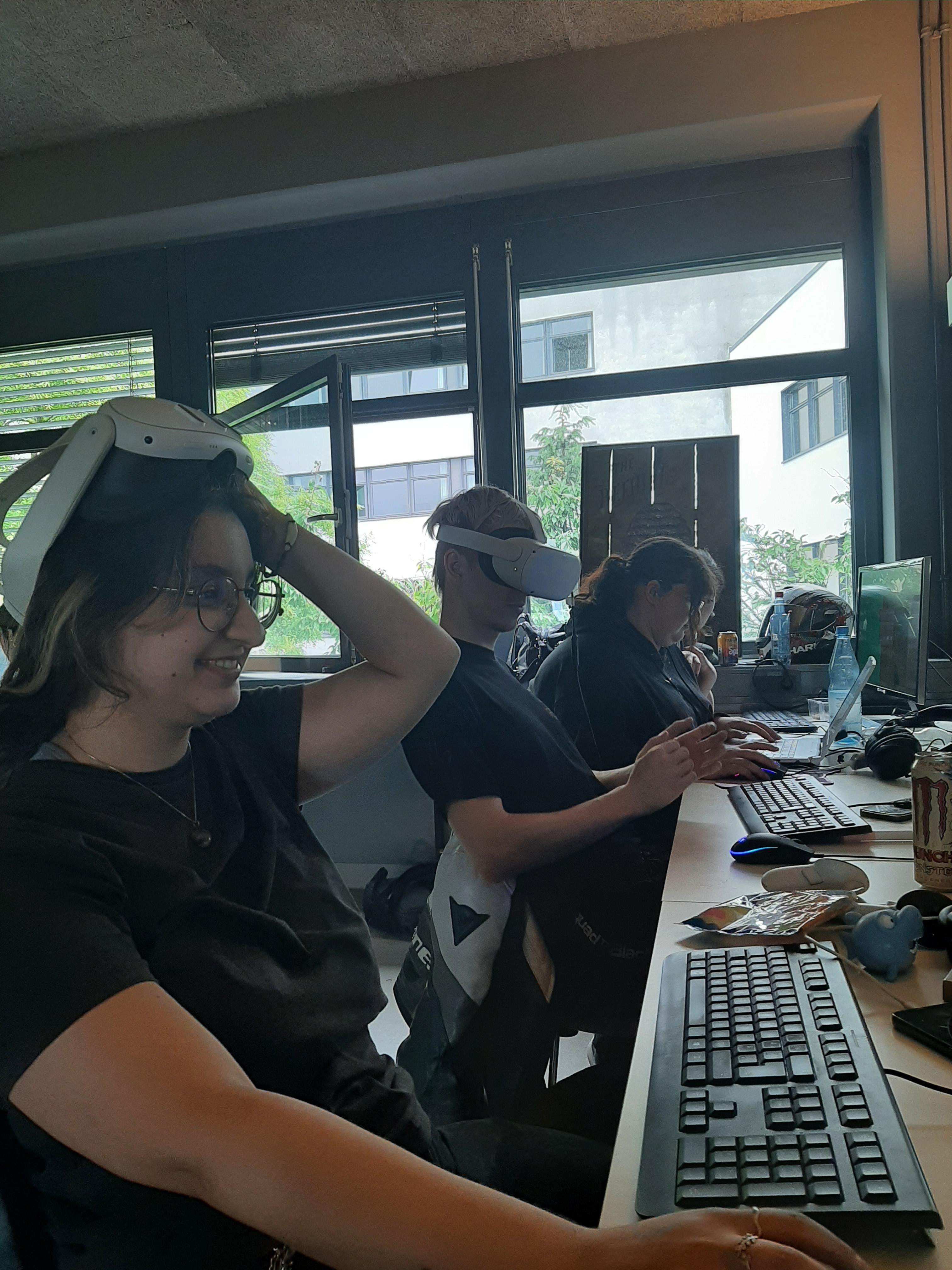
Development